
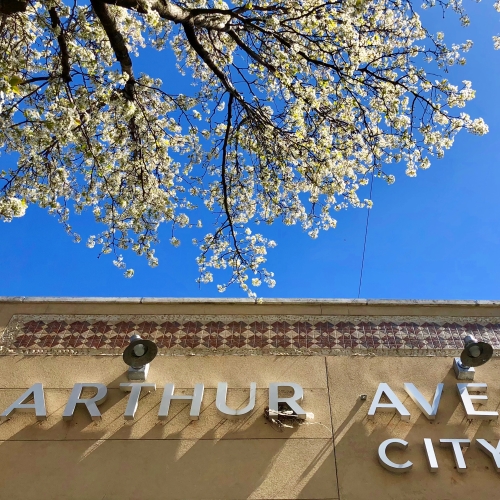
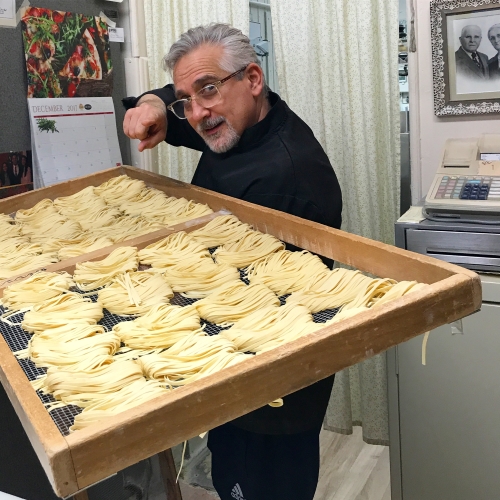
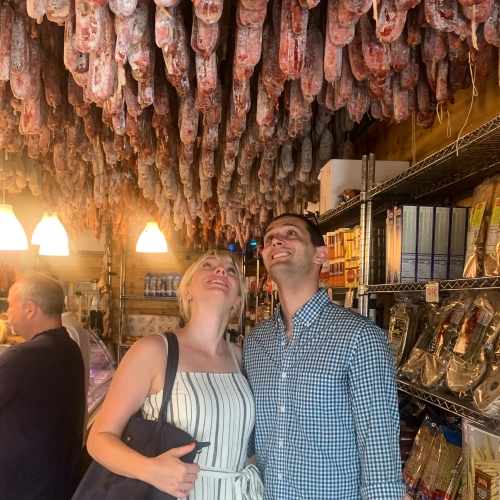
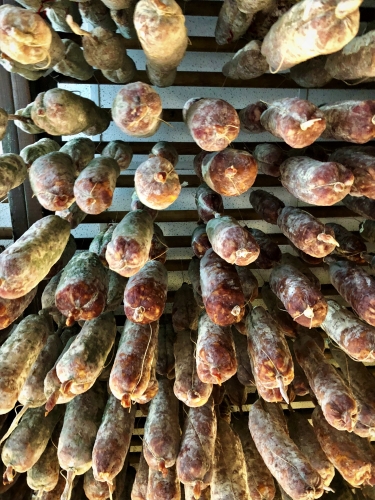
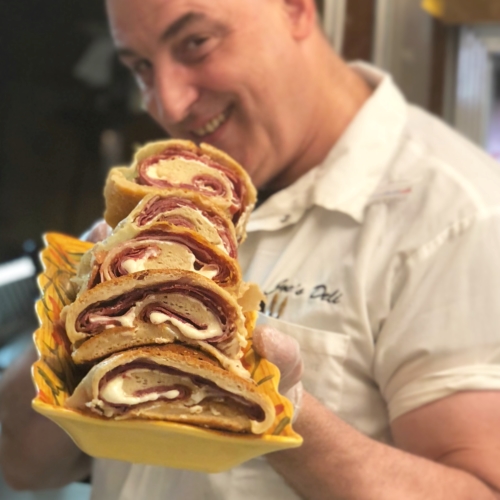






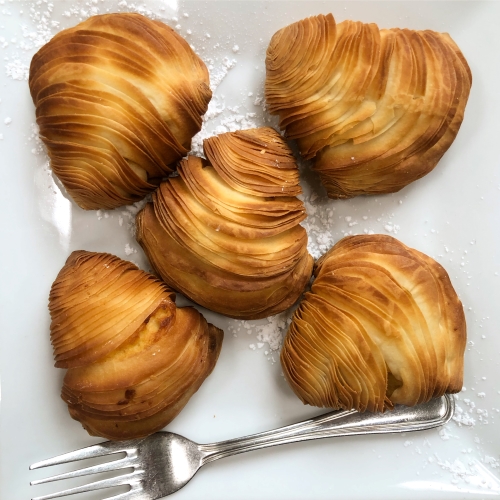
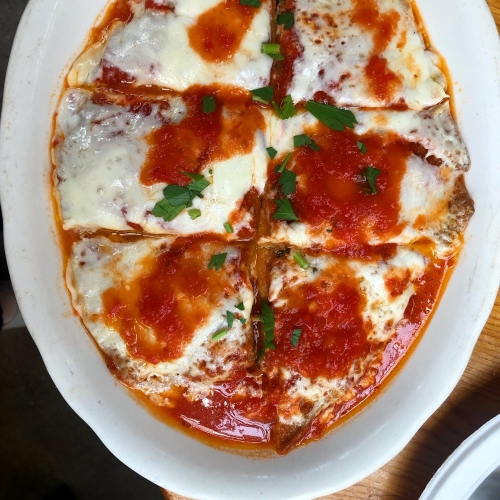
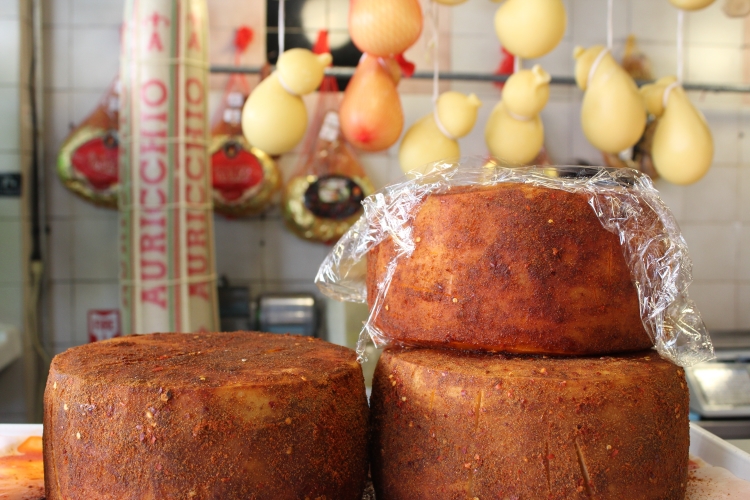
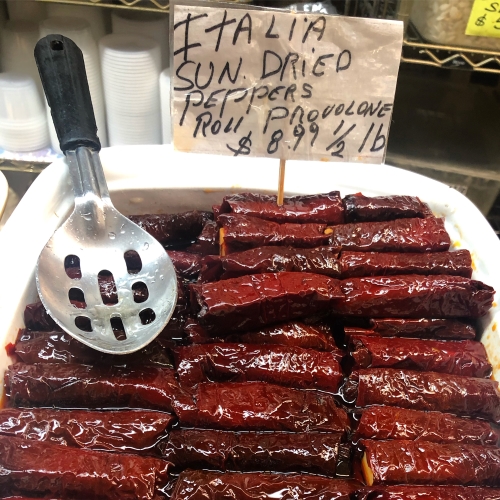



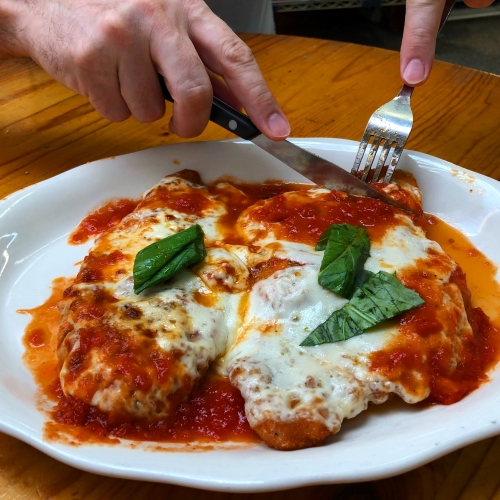

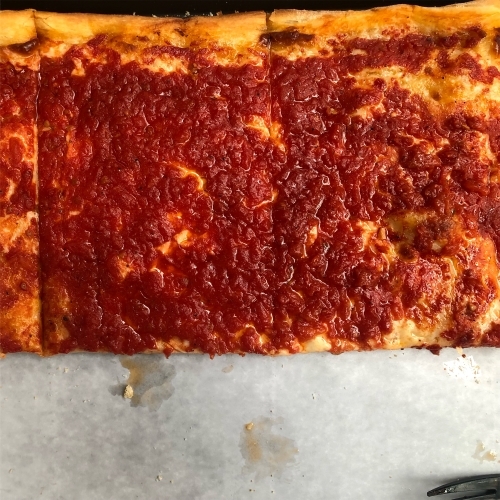
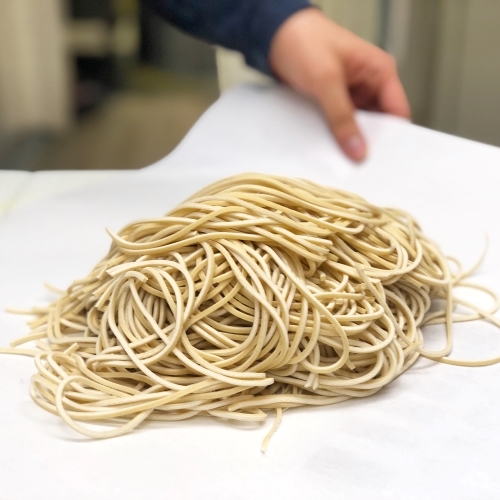

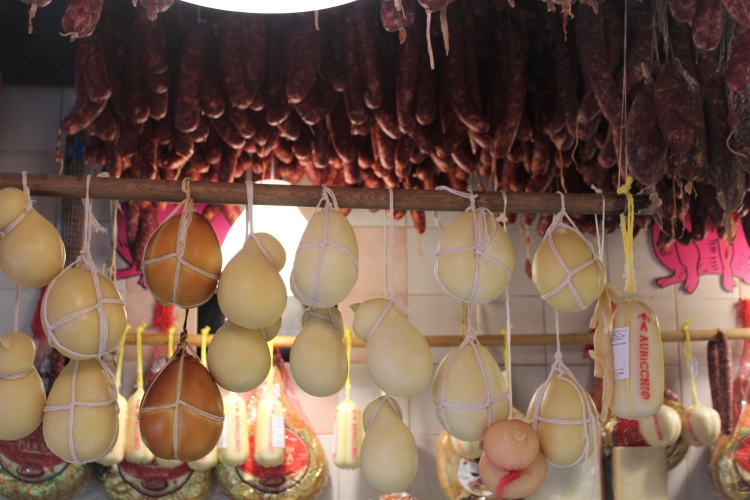

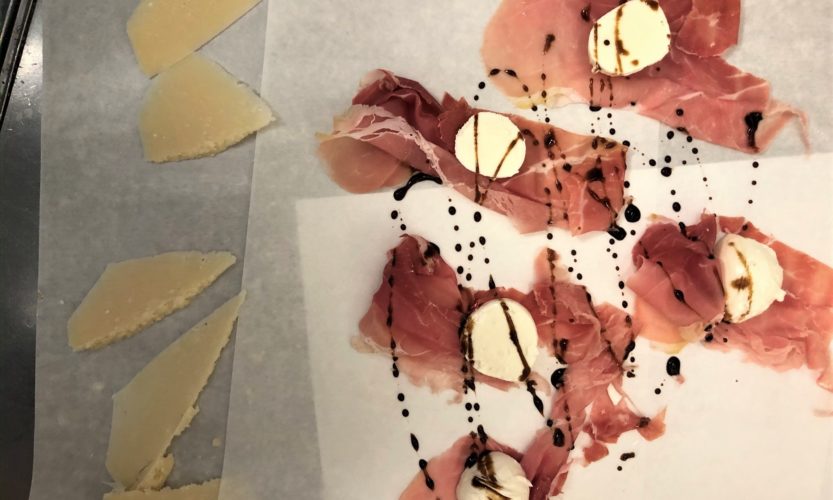
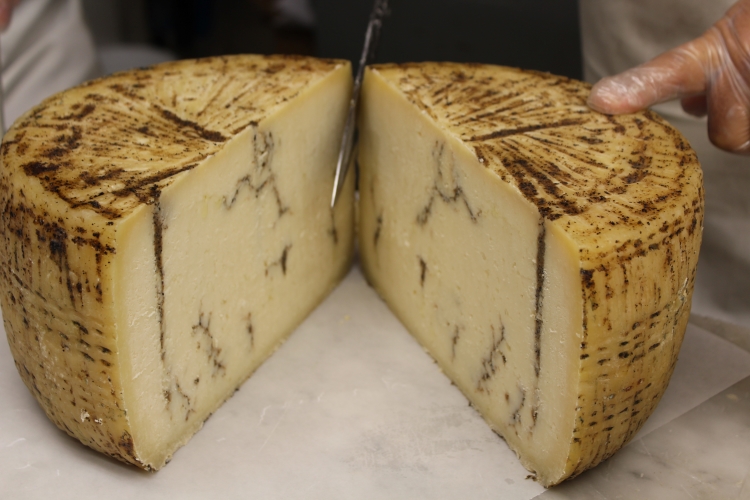

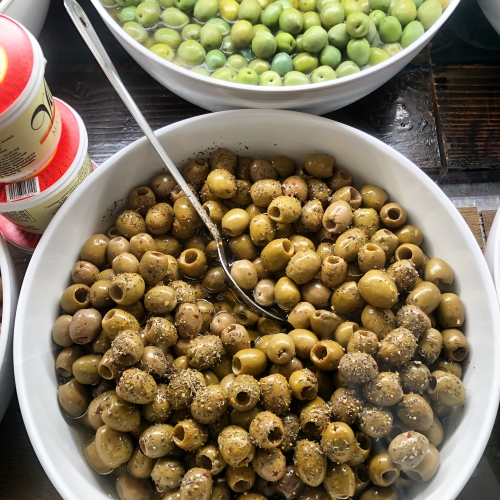

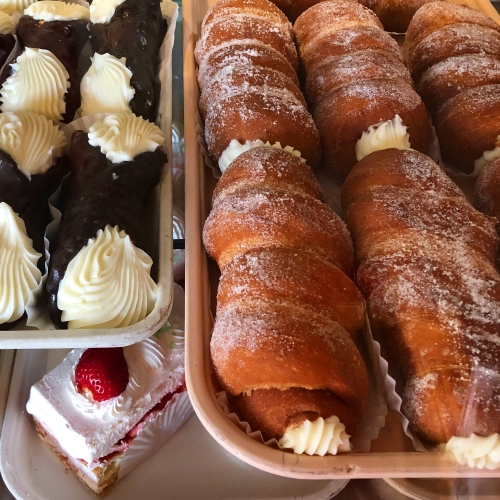
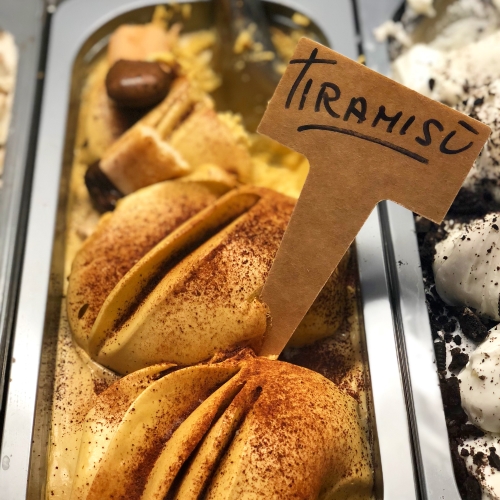
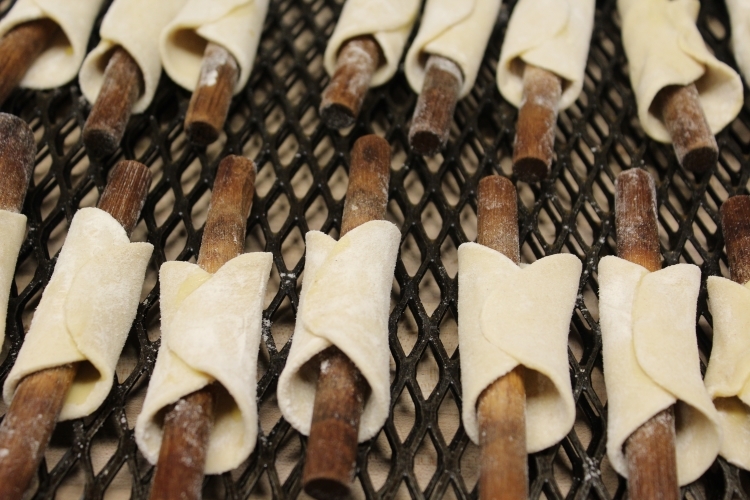
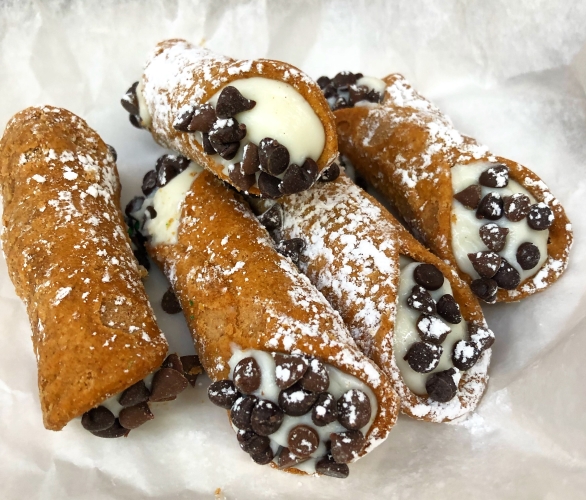

The Belmont section of the Bronx, called simply “Arthur Avenue,” is the most intact Little Italy in the United States. Within six square blocks you’ll find over two dozen family-owned Italian food shops and restaurants, many of which are over 100 years old. If you’re an Italian food lover, welcome to paradiso.
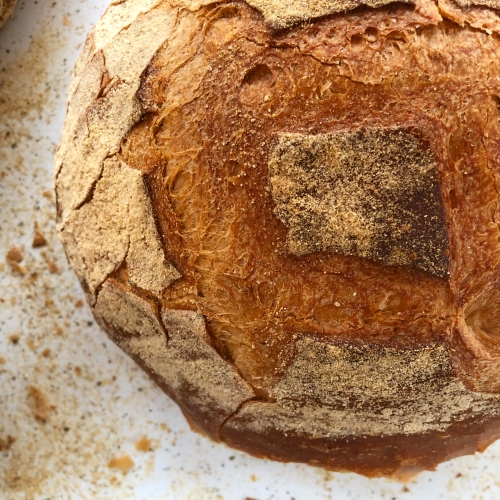
Every day five different delis make their own hand-pulled mozzarella. Each one is excellent. There are three bread bakeries to which loyalties are fierce. Butcher shops and fish markets display the best of what’s available that day, leaving little to the imagination because shoppers here demand the highest quality.
What keeps people coming back, both in front of and behind the counter? Love, tradition and loyalty are all good answers, but a recent discovery in the archives of the Bronx Historical Society revealed something more tradition and heritage based. While the official Bronx history books say Belmont was built on land donated by a Gilded Age heiress and named for President Chester Allen Arthur, maps, real estate and tax records reveal this is mere legend.
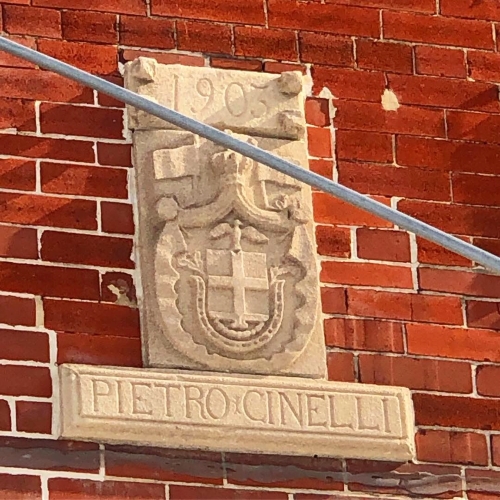
What is true is that in the early 1900s real estate developers marketed what was still a rural hinterland of New York City to newly arrived Italian immigrants who lived in East Harlem tenements. They called the area “the Italian colonies,” and emphasized that in the Bronx there was clean air and land to plant your own garden. A wealthy Italian immigrant named Pietro Cinelli developed new apartment houses, built his own palazzo right on Arthur Avenue, and even petitioned the Archdiocese of New York to build a Catholic Church for his fellow immigrants. From the very beginning, Belmont was an Italian villaggio in the Bronx. Well over one hundred years later, Arthur Avenue stills draw strength from its deep Italian roots.
Special thanks to Danielle Oteri for this post and the mouth-watering photographs; she is the founder of Arthur Avenue Food Tours. Danielle’s grandparents immigrated here in 1918 and opened a butcher shop on Arthur Avenue. Whether you live in the NYC area or plan to visit soon, one of her yummy food crawls is a must.


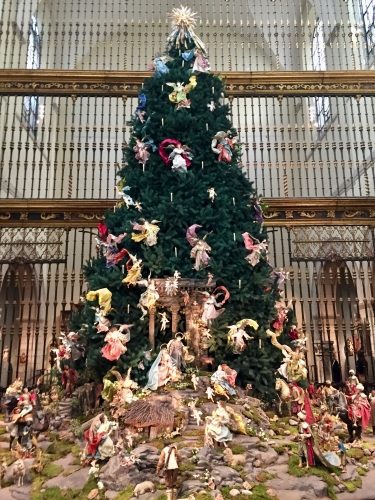

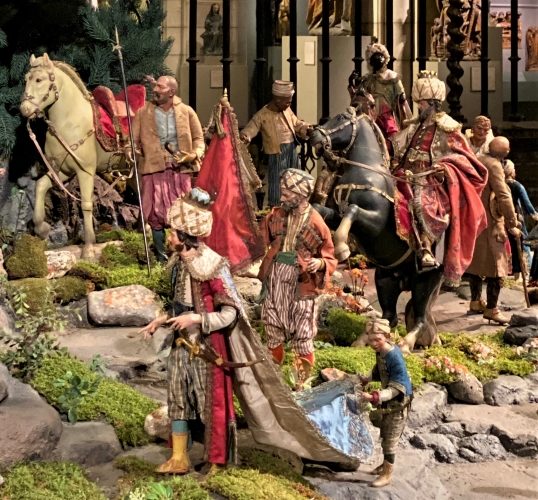
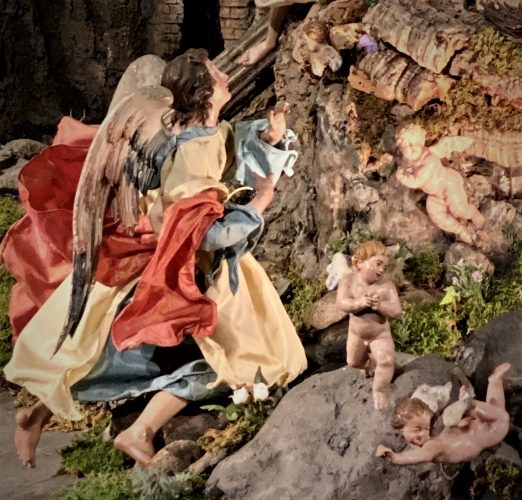
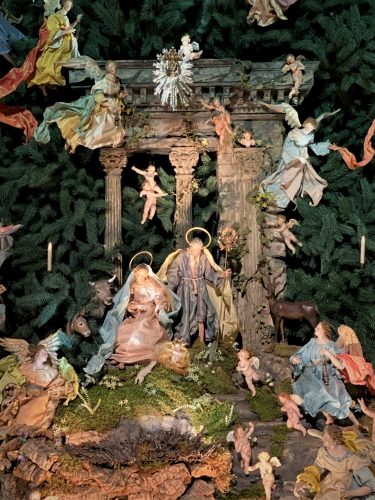
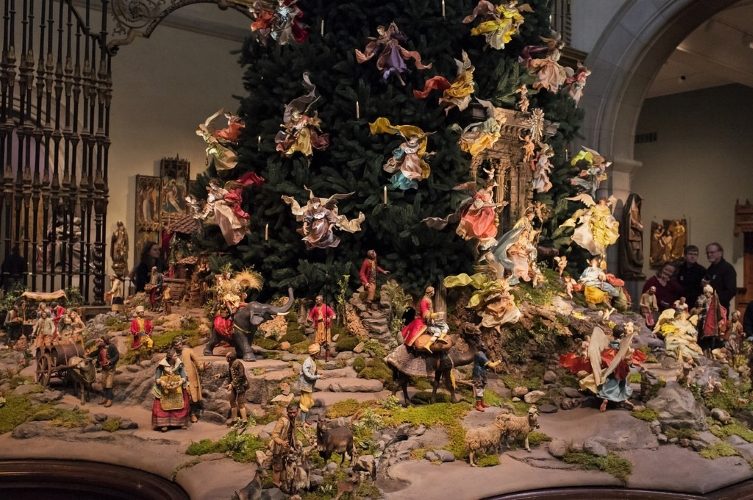
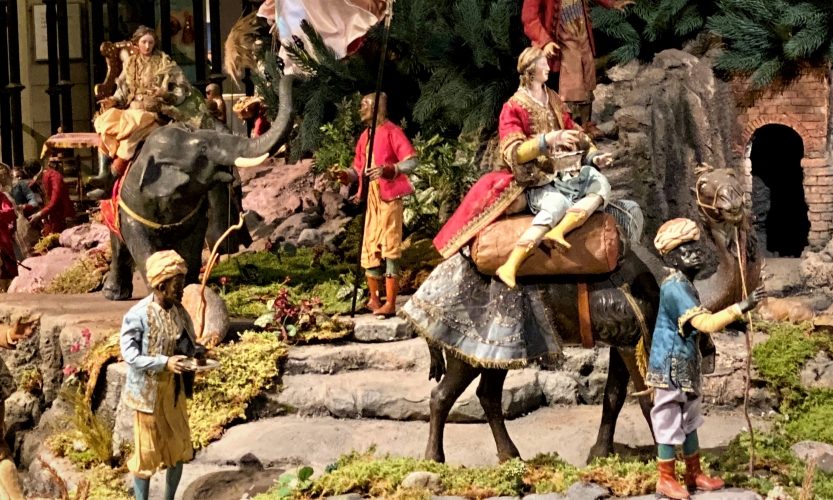
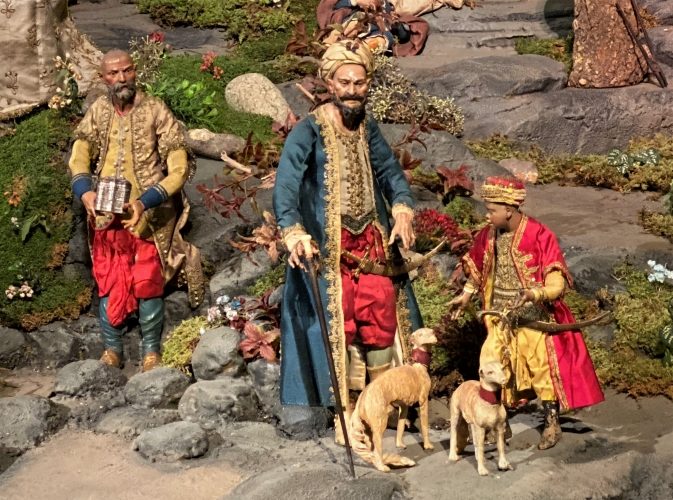
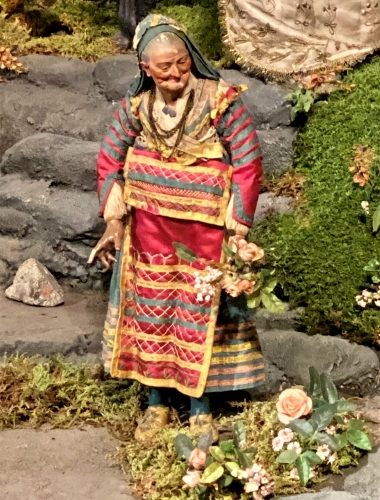
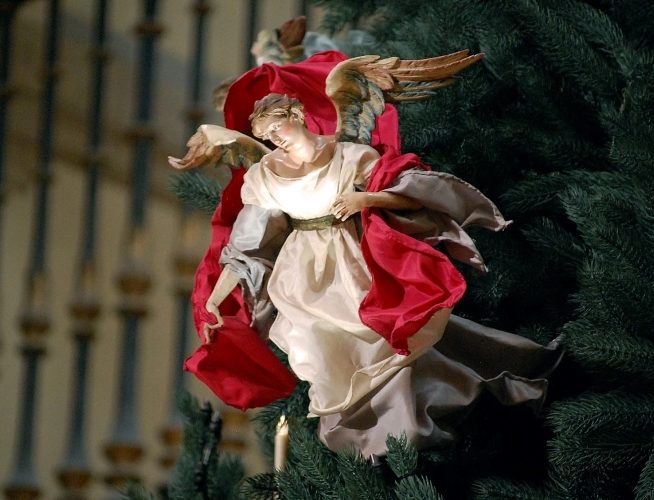
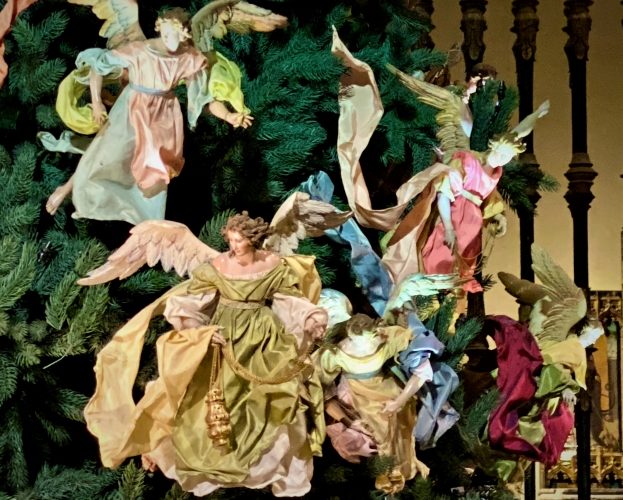
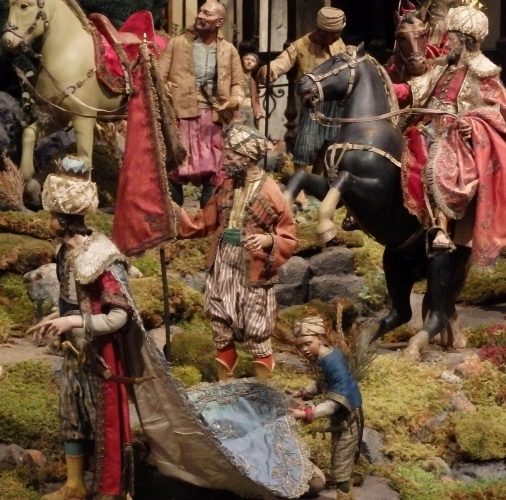
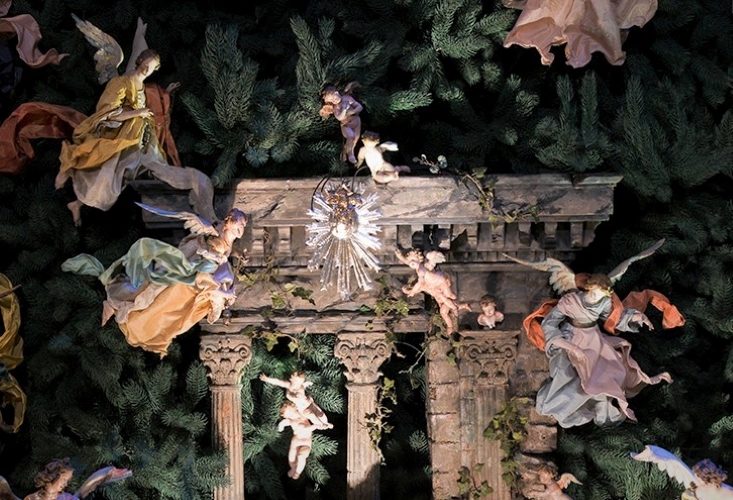
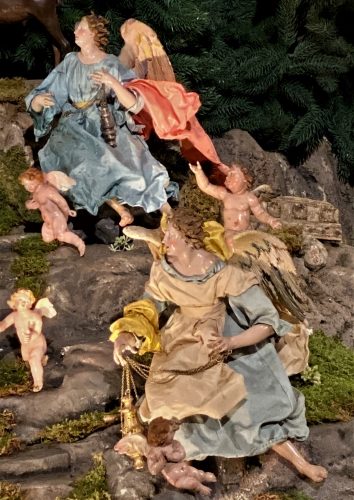
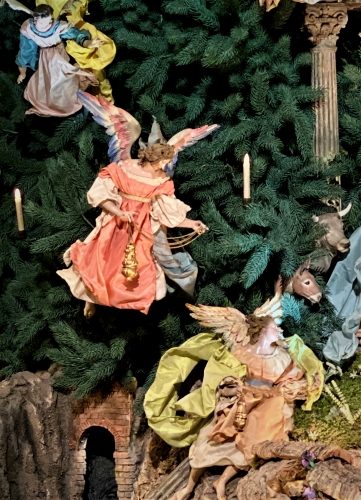
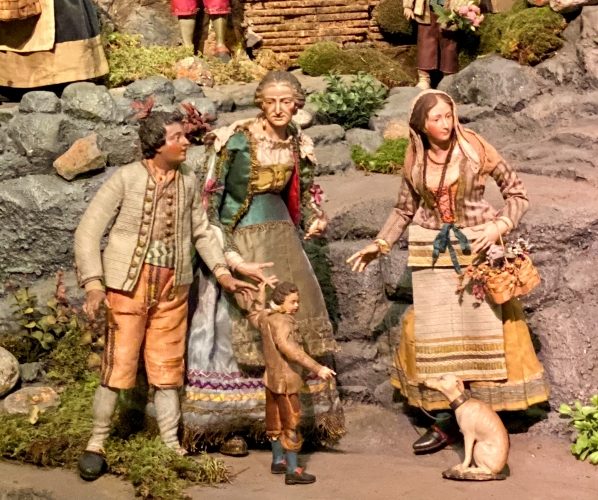
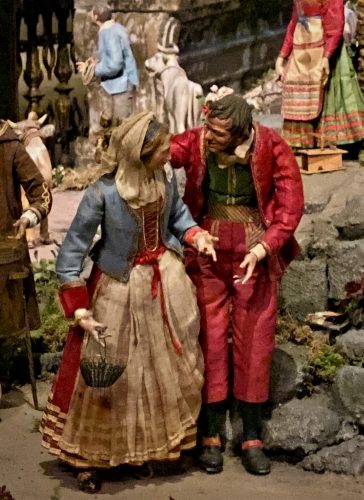
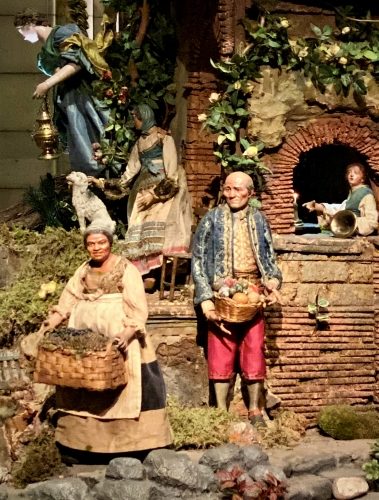
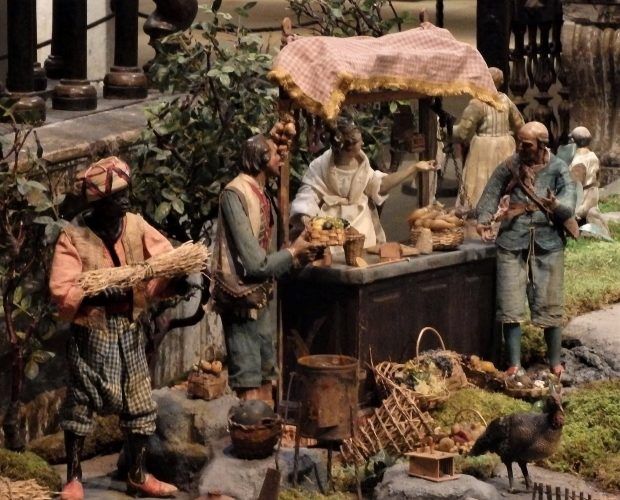
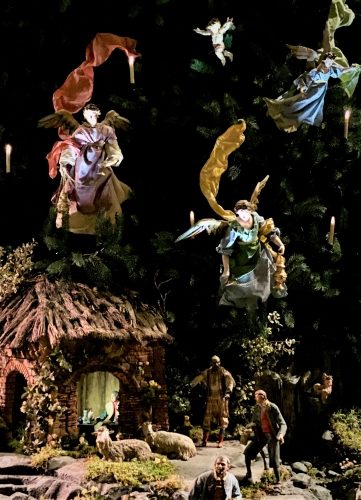
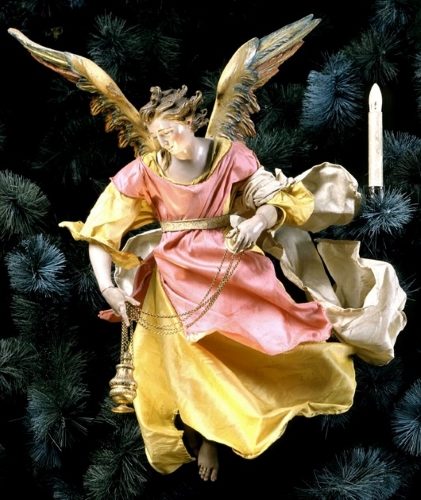
The tradition of nativity scenes began with Saint Francis of Assisi who staged the first nativity in 1223 with people and live ox and lamb. Overtime this evolved to life-sized wooden figures placed in front of churches and then, into scenes made of small expressive terracotta figurines.
During the 1700s, crèche figures were an obsession in Naples. Wealthy families competed to create the most impressive ones. When Don Carlos of Bourbon (the future Charles III of Spain) ruled Naples and Sicily from 1734-1769, he reputedly owned a crèche with nearly 6,000 figures. Neapolitan crèches were often given as presents to royalty all over Europe so such figurines can appear on the antique market even today.
The 18th century crèche of the Metropolitan Museum of Art is the finest in the US and features over 200 figurines made by the Neapolitan artisan Giuseppe Sammartino and his pupils. All the figurines have finely painted terracotta heads; legs, arms, and wings carved from wood; and bodies of hemp and wire. No two are alike. The graceful angels decorating the tree all have different faces and clothing and carry different objects. The Nativity scene surrounding the majestic twenty-foot blue spruce features the three main elements characteristic of 18th-century Naples: adoring shepherds and their flocks, the Three Kings in procession, and colorful peasants and townspeople engaged in quotidian tasks. In the background are dozens of animals and architectural pieces including quaint houses, market stalls, Roman ruins, and even a typical Italian fountain.
The Neapolitan Crèche and Baroque Angel Tree located in the Met’s Medieval Courtyard are on display through the Feast of the Epiphany, January 6th (the 12th day of Christmas) marking the arrival of the Three Wise Man bringing their finest gifts for the new born King.
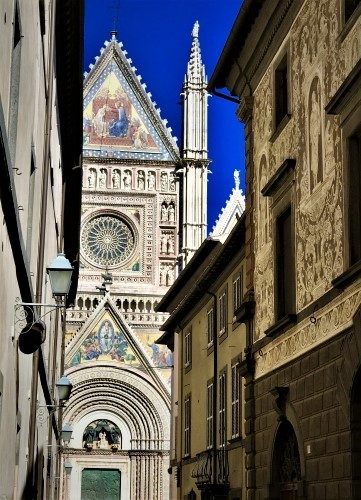
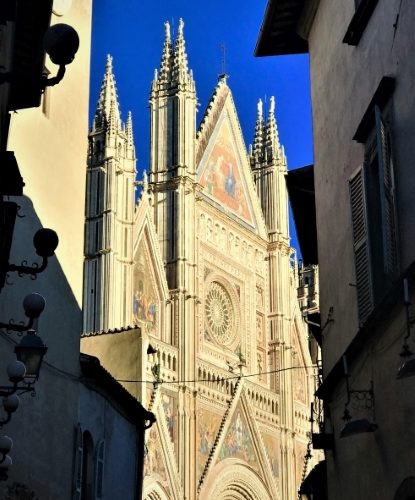
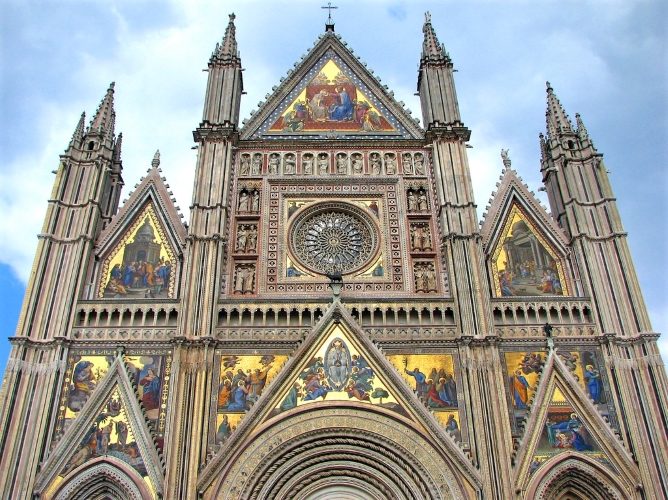
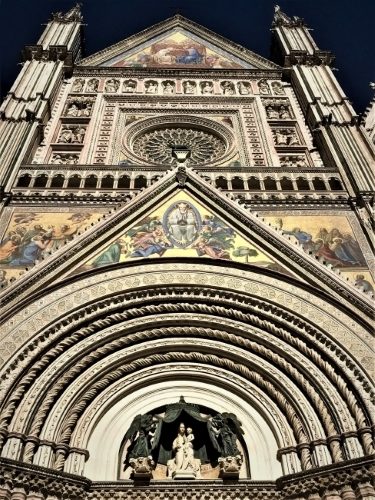
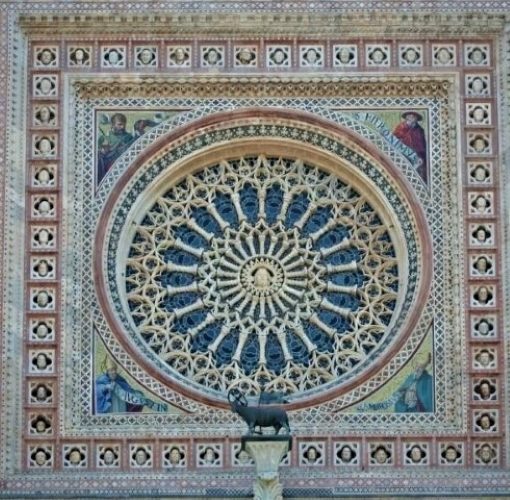
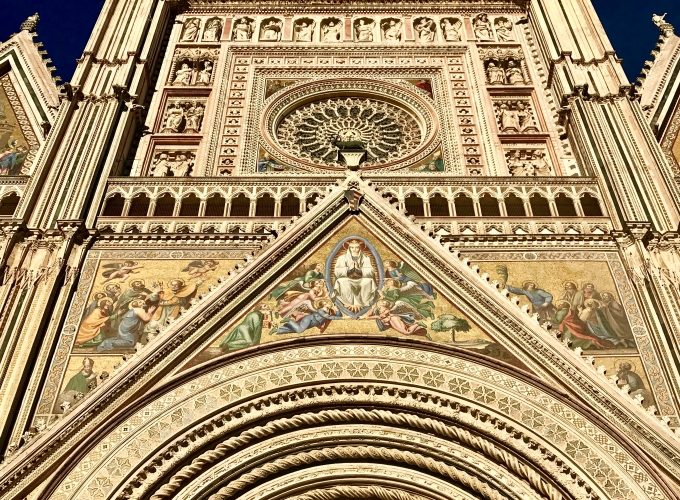
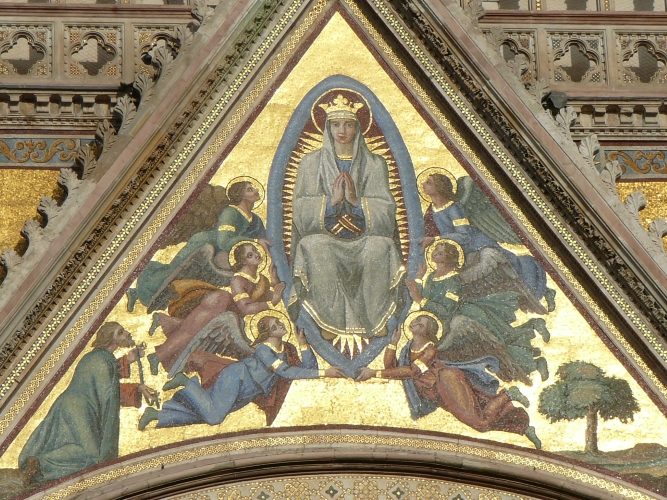
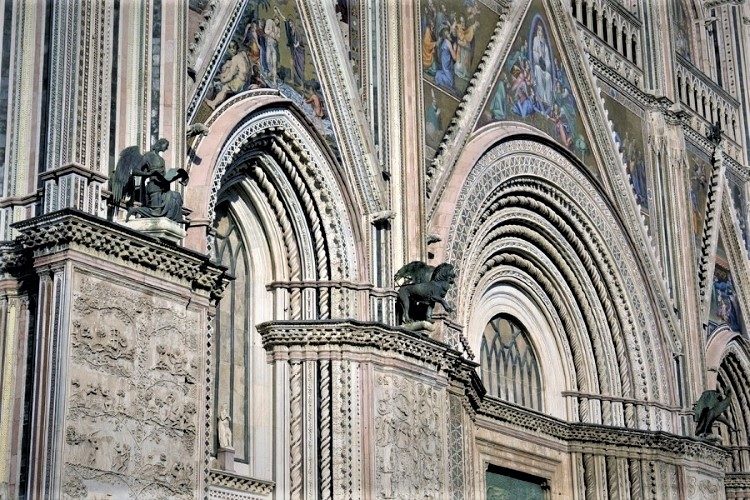
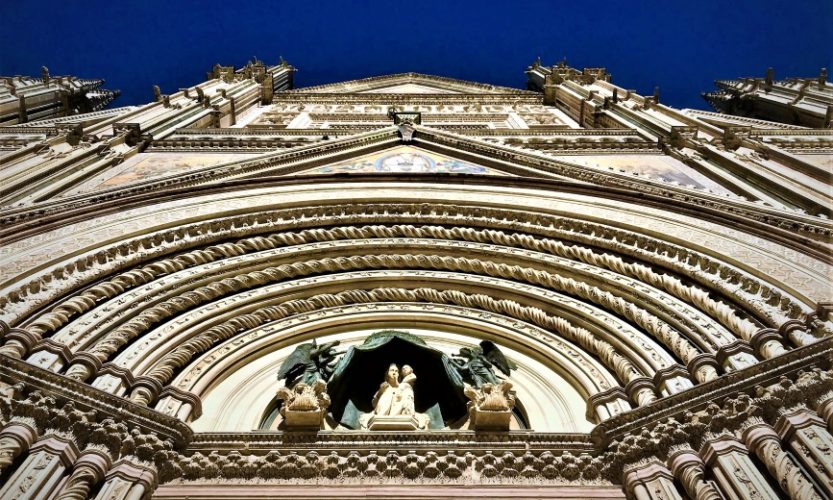
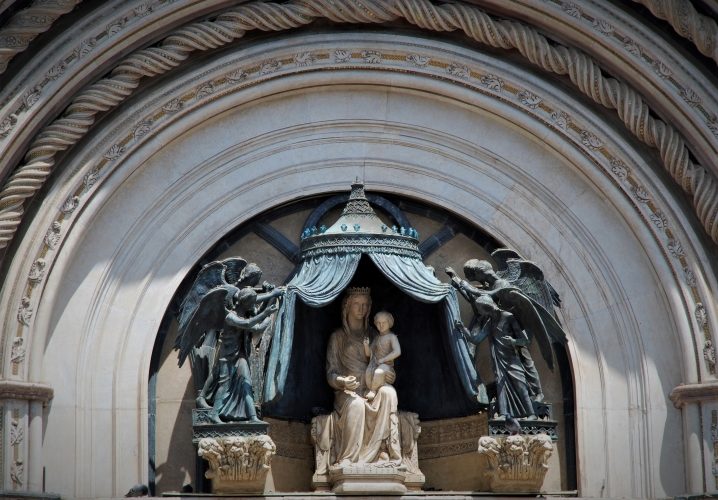
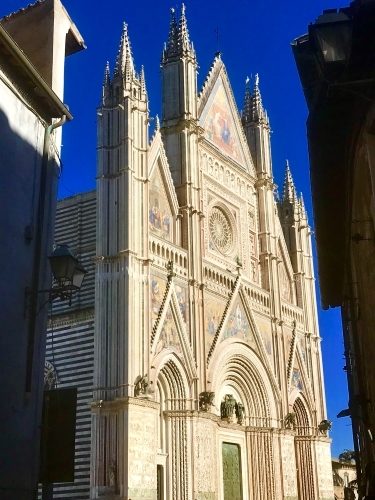
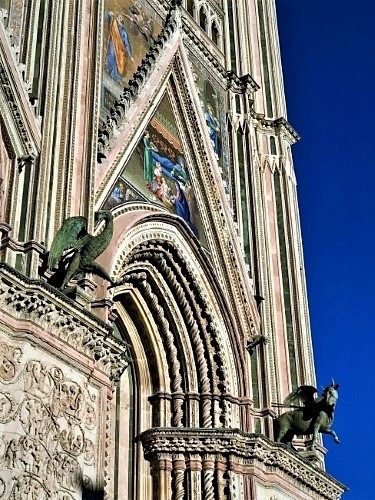
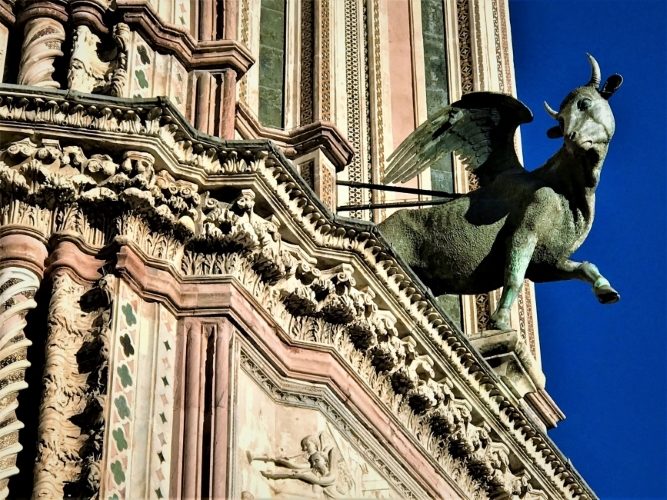
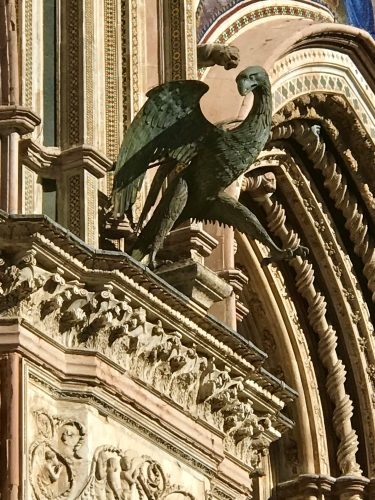
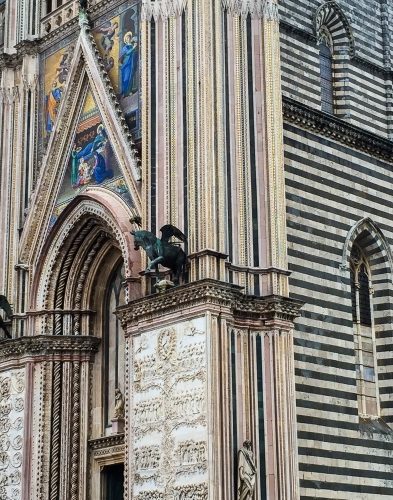
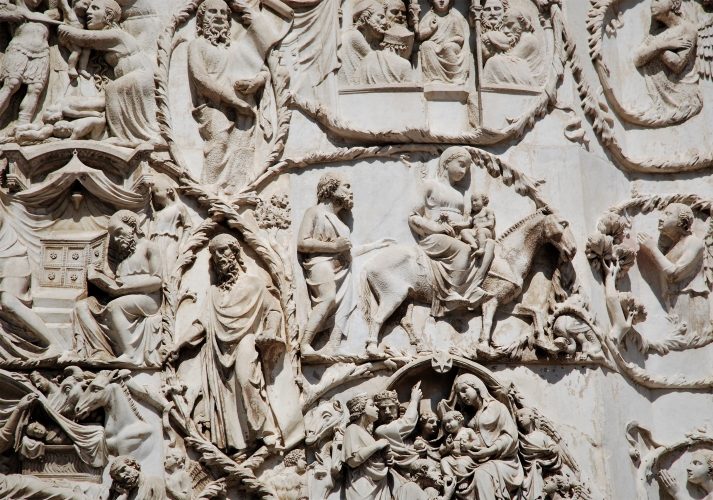
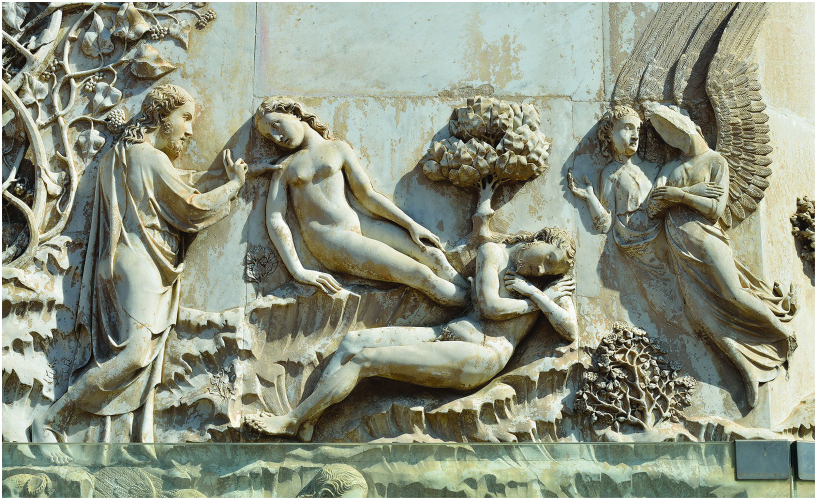
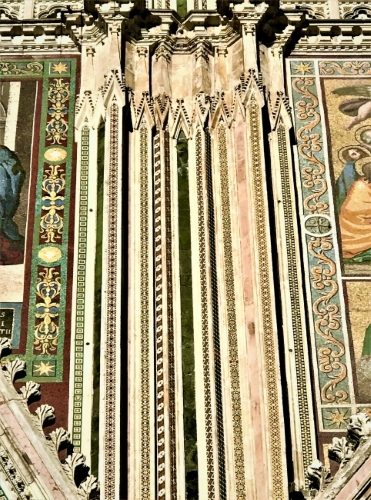
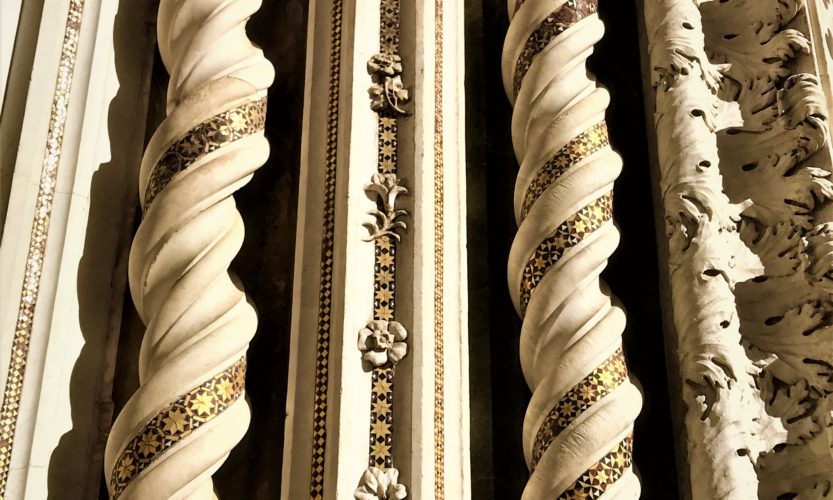
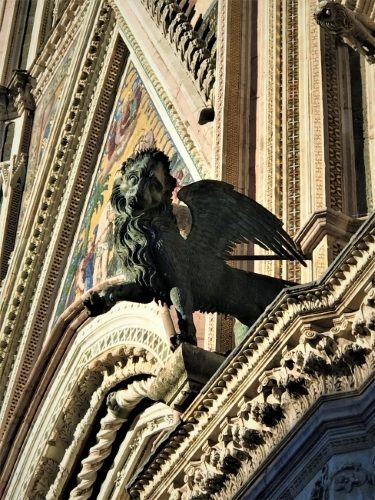
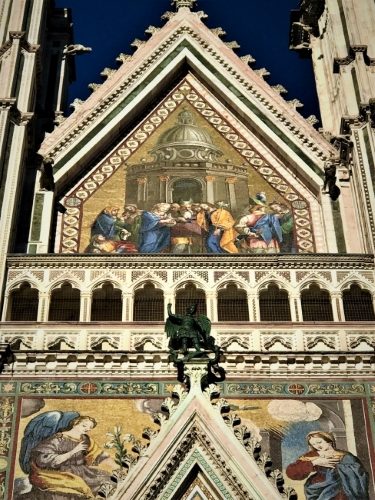
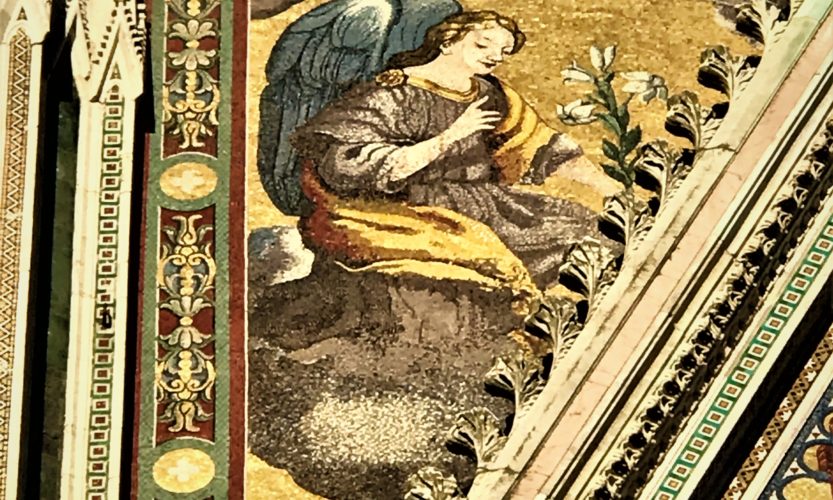
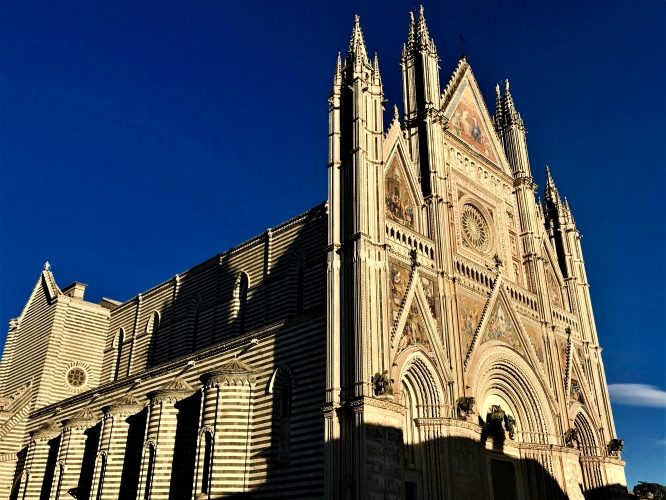
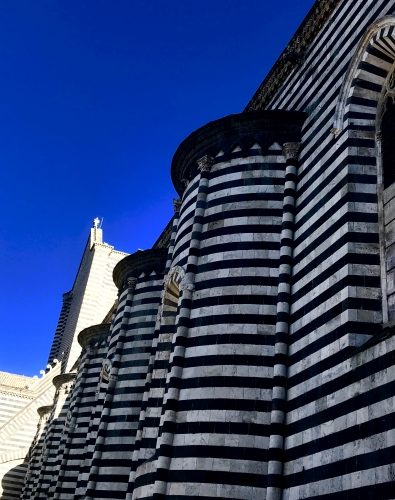
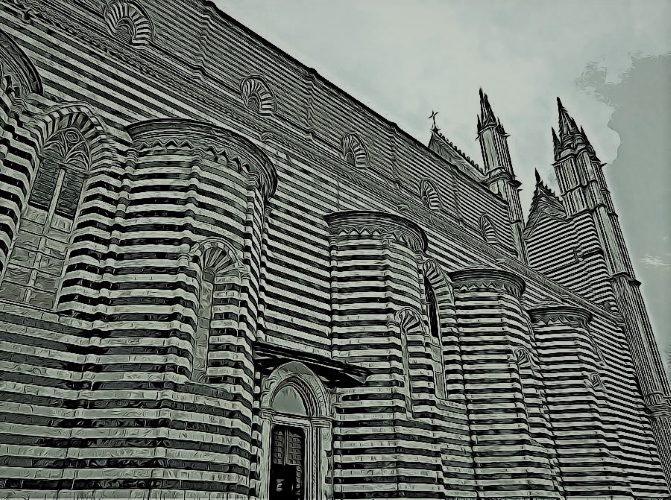

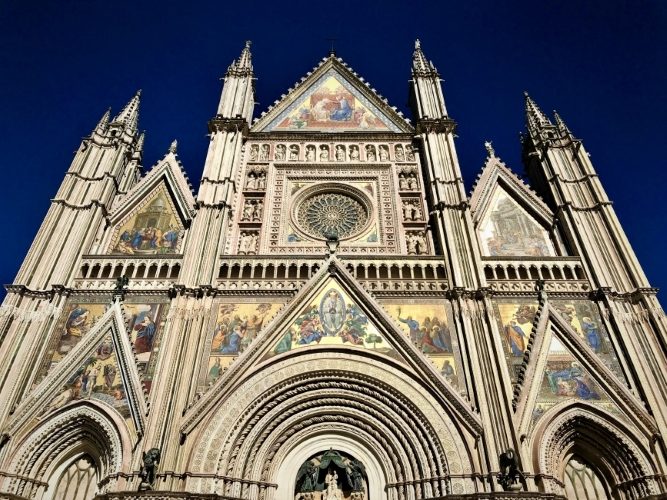
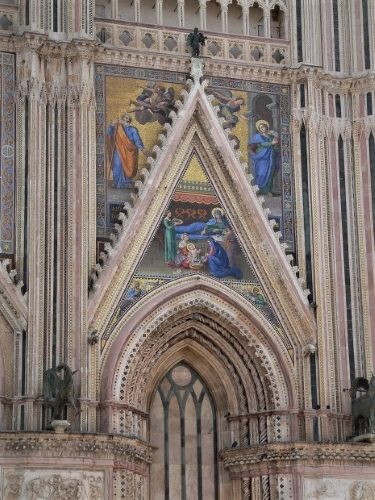
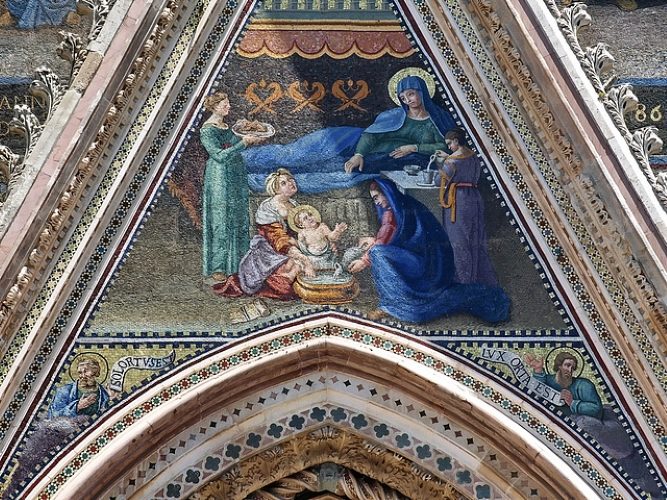
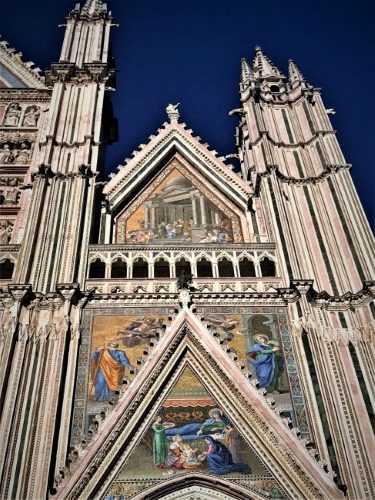
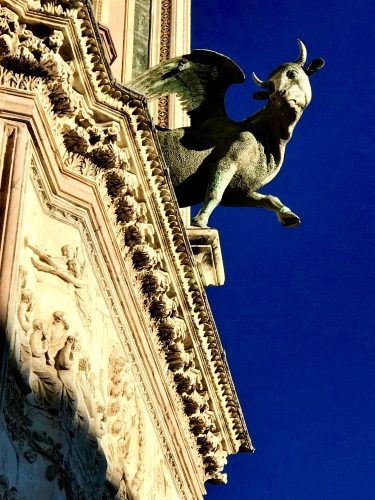
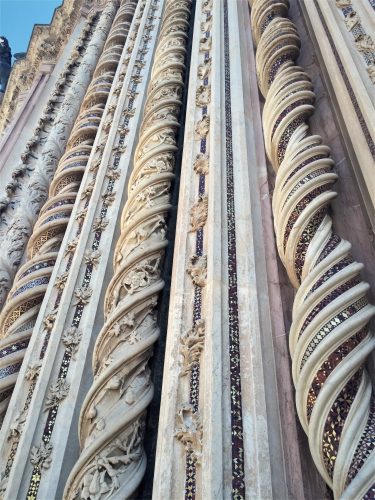
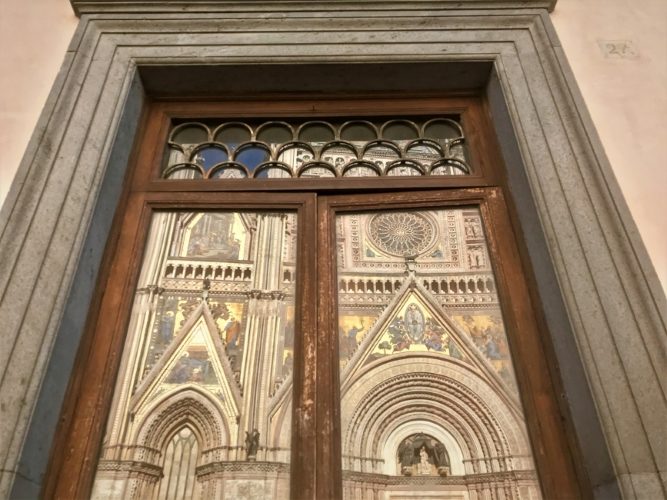
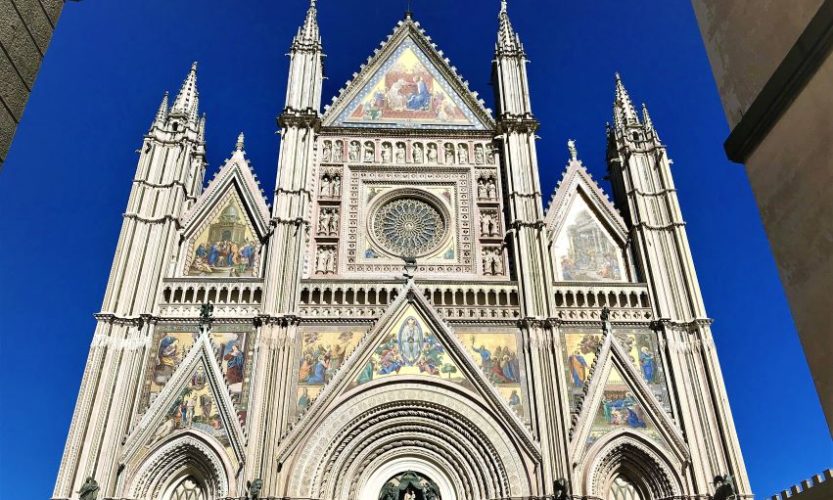
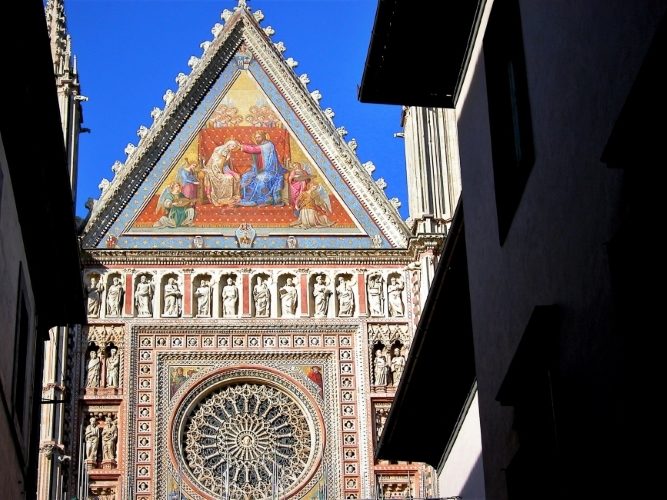
Orvieto’s cathedral doesn’t have the global profile of Saint Peter’s in Rome, Saint Mark’s in Venice or the Duomo in Florence, and if the Catholic church were to do a survey of Italy’s most glorious churches it might even trail Milan’s cathedral or Siena’s stunner. But if you arrive in Orvieto on a blue-skied day and stroll up Via Nebbia, then turn the corner with all the tourist signs and cast your gaze heavenward, there’s a good chance that you’ll forget all the others, at least for a while. There before you is the Duomo, in all its grand Gothic glory. Construction began in 1290 but wasn’t completed until three hundred years later, and by that time, according to one historian’s count, it had become the collaborative product of 33 architects, 152 sculptors, 68 painters and 90 mosaic artisans.
Art historian Jacob Burckhardt called the Duomo “the greatest and richest polychrome monument in the world.” Pope Leo XIII suggested that on Judgment Day the Duomo’s beauty would levitate it straight to heaven … I think so too!


Copyright - Postcards from the Boot.