
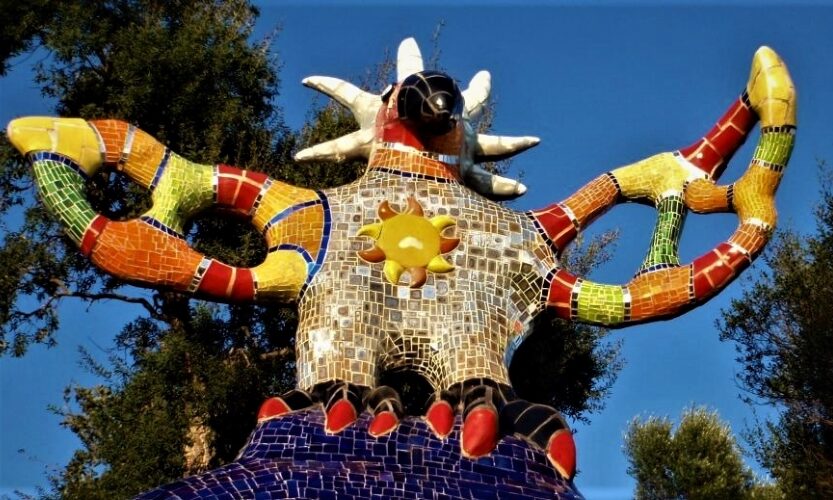
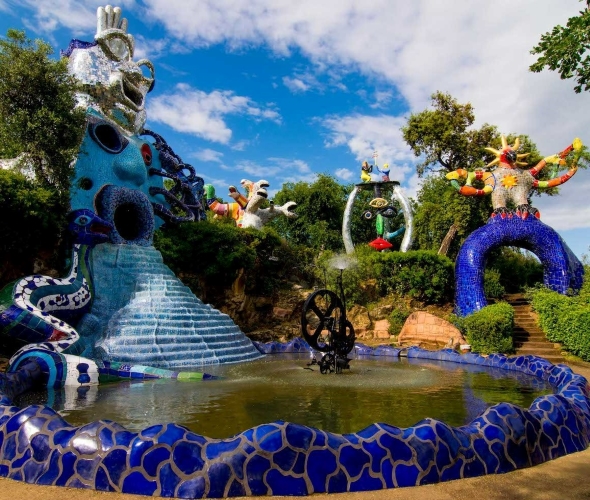
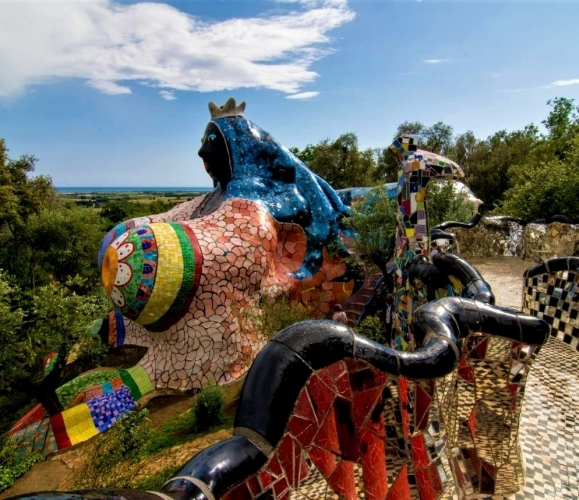
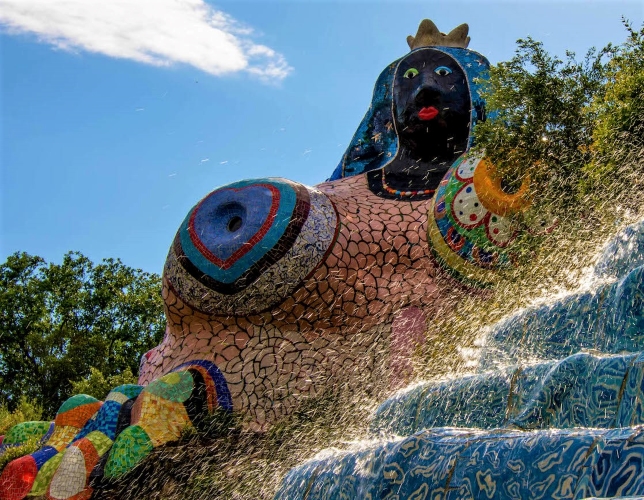
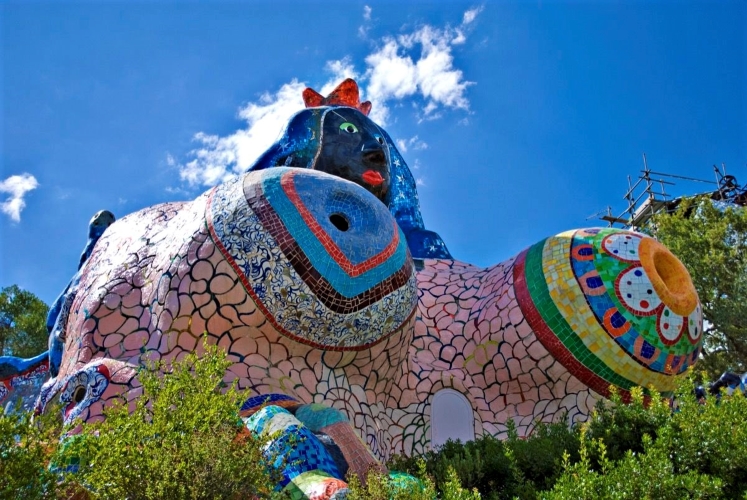
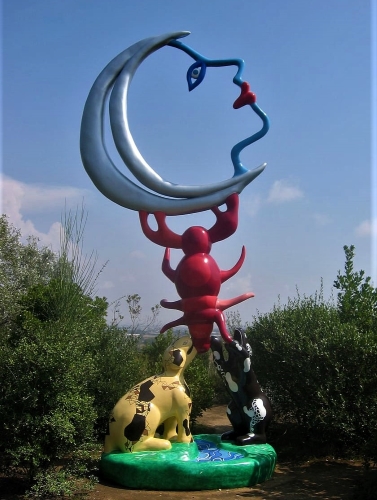
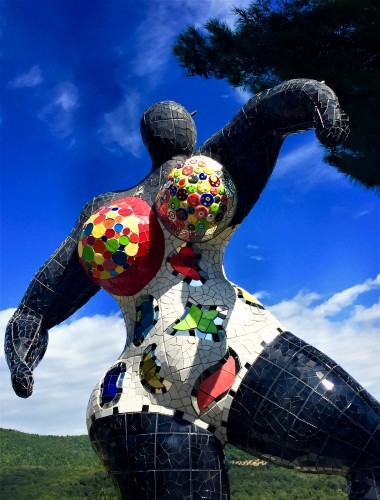
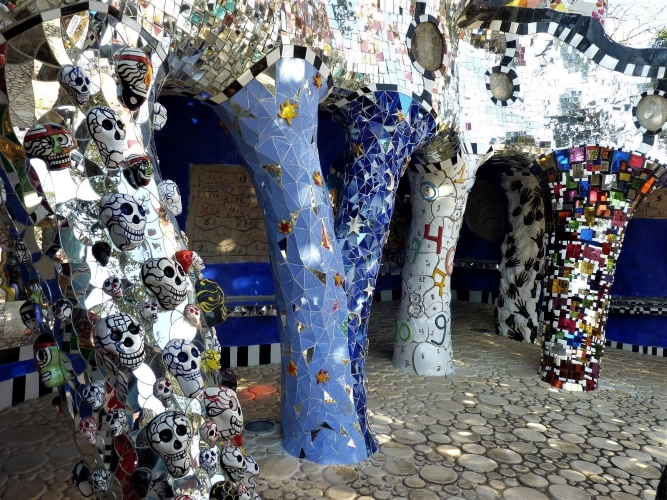
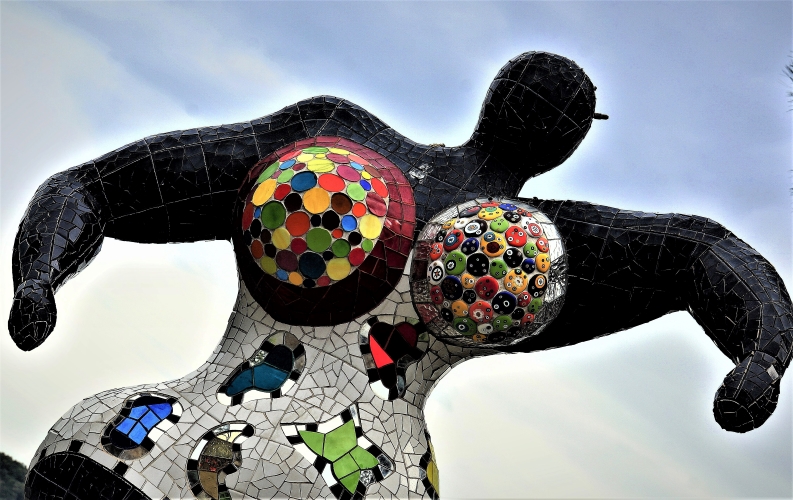
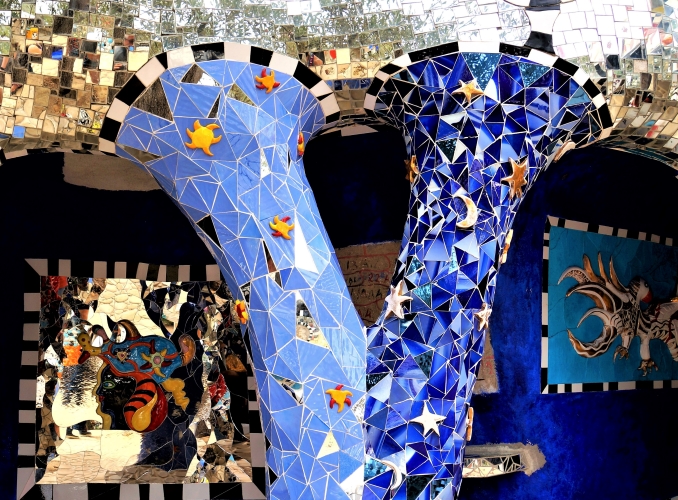

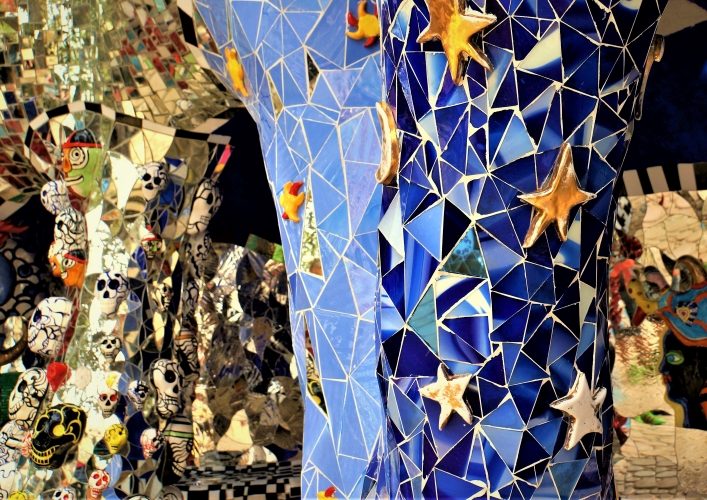
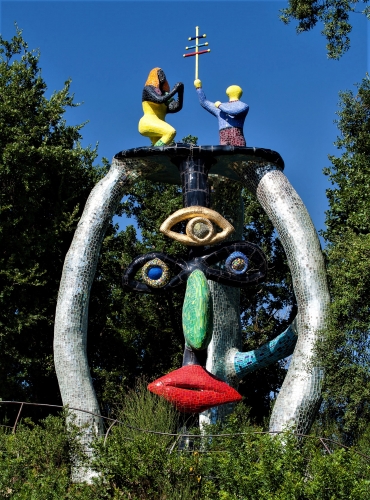
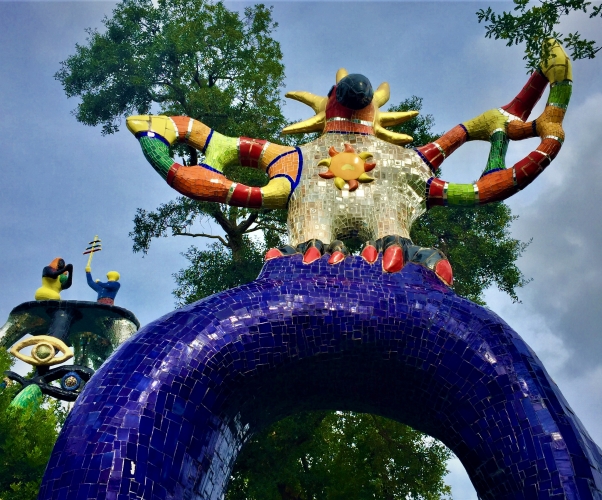
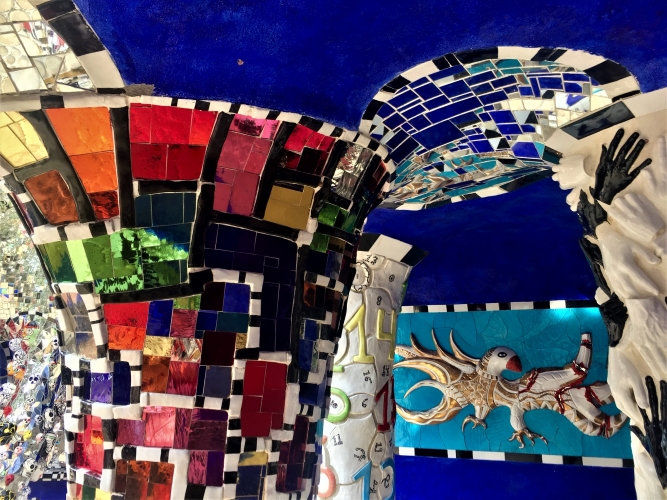
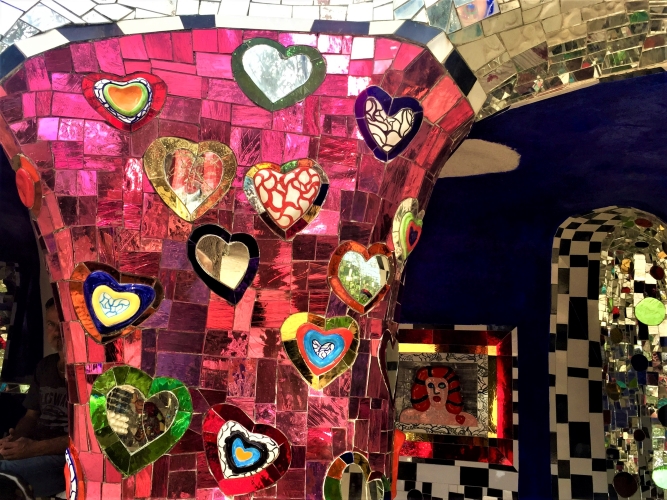
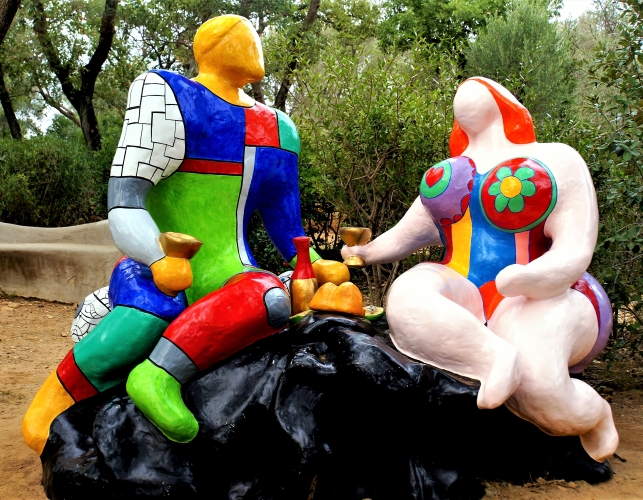
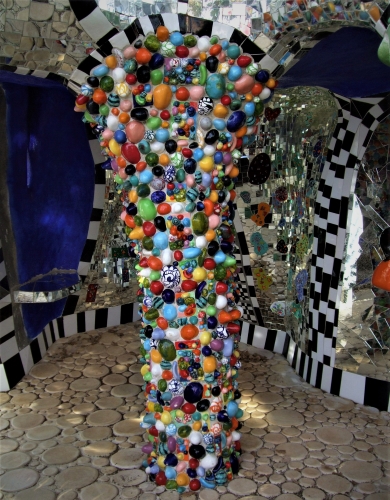
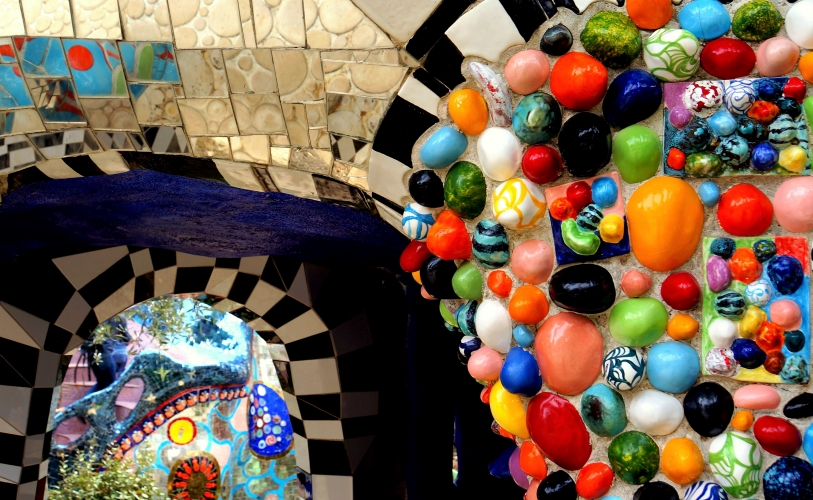
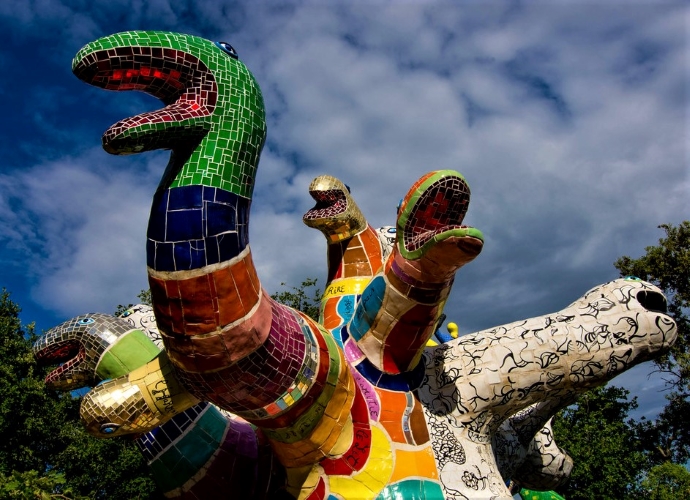
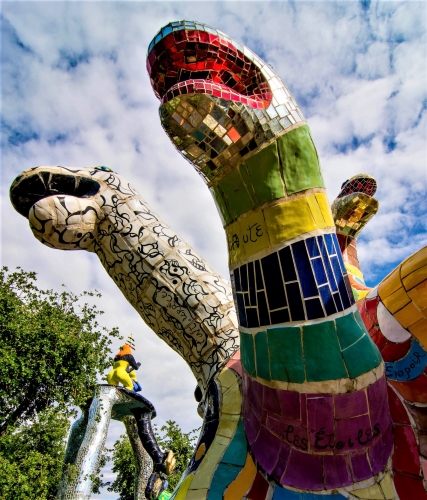
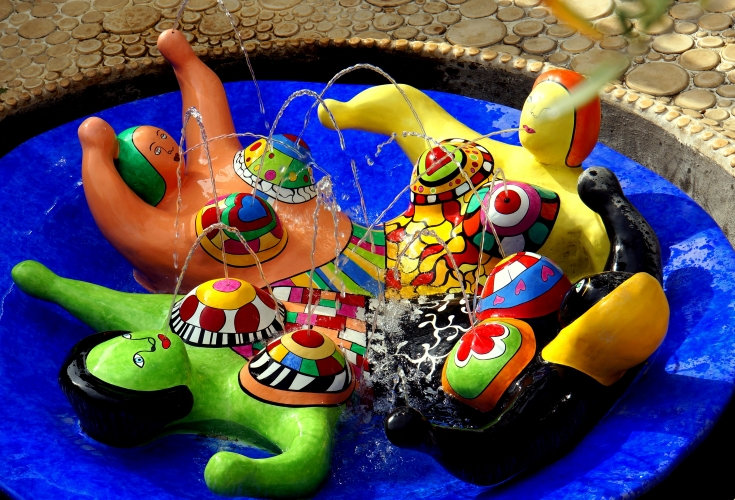
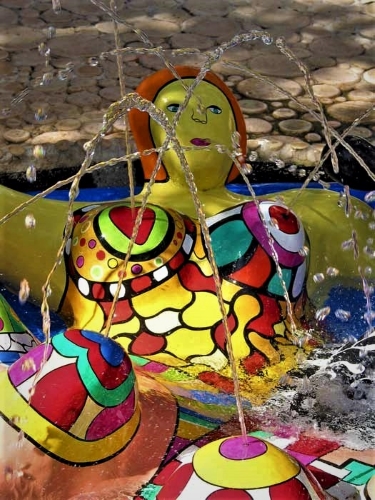
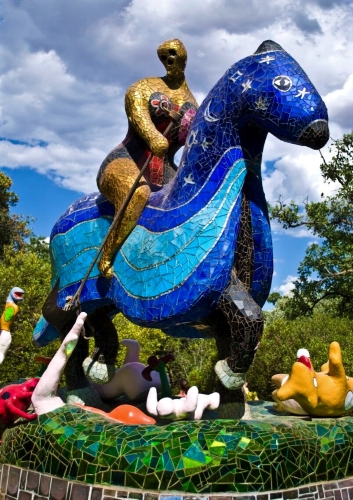
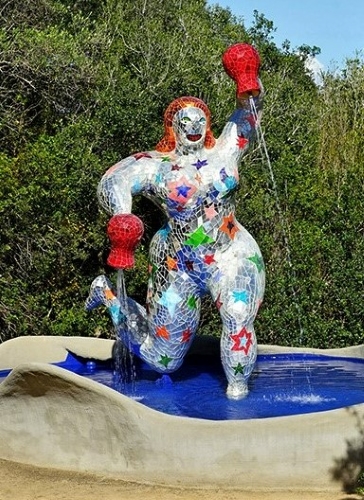
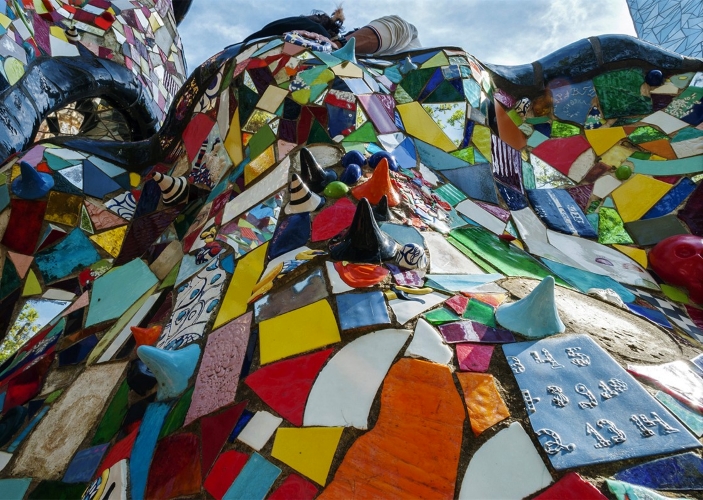
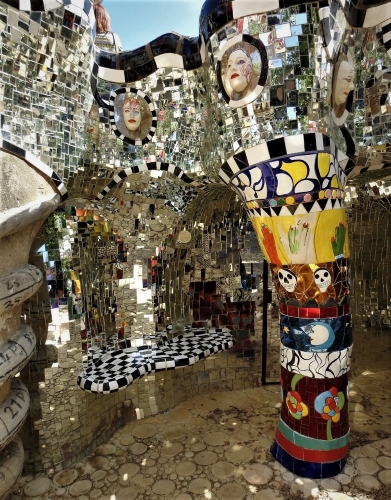
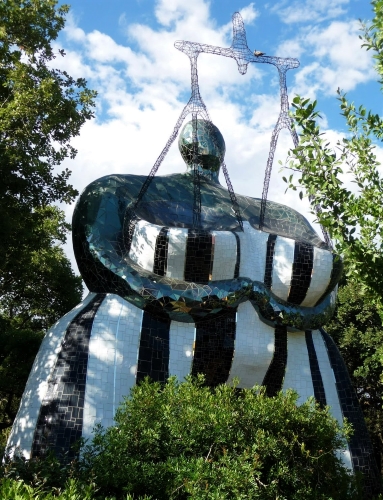
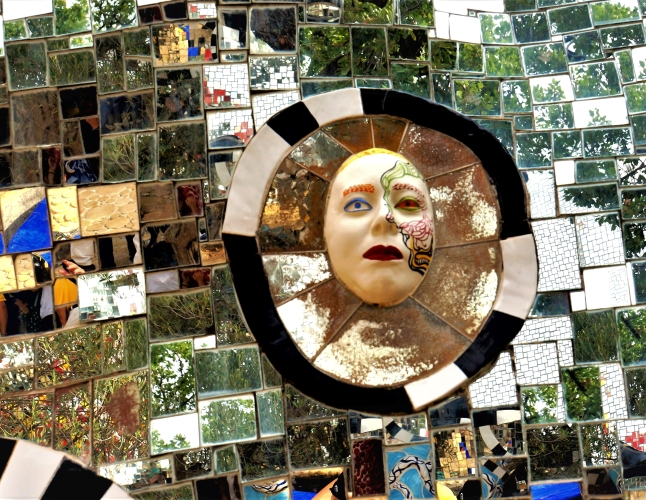
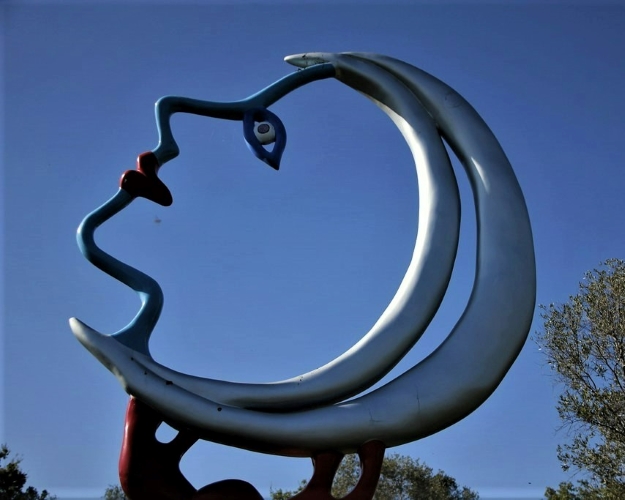
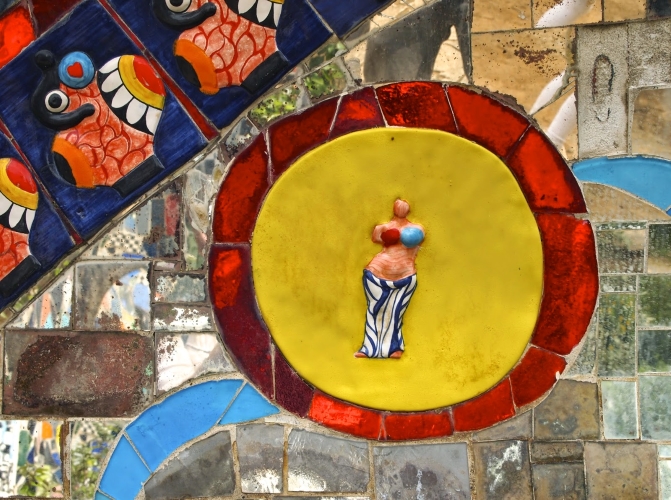
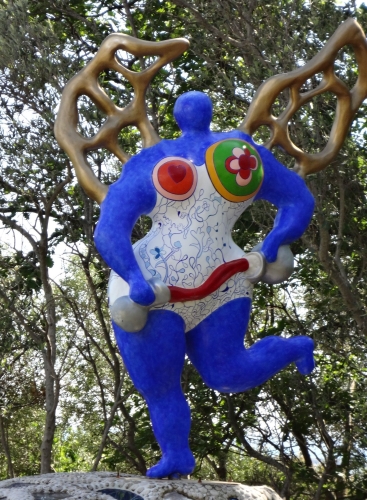
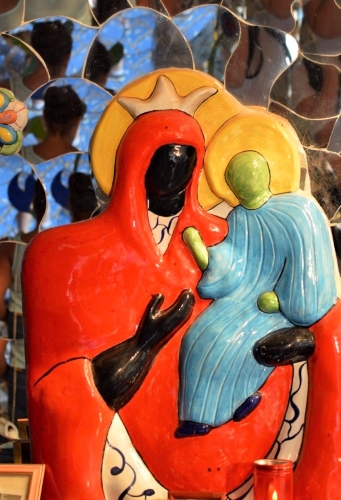
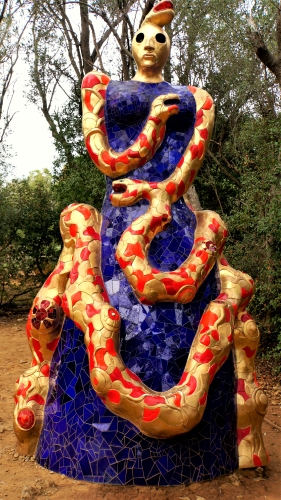
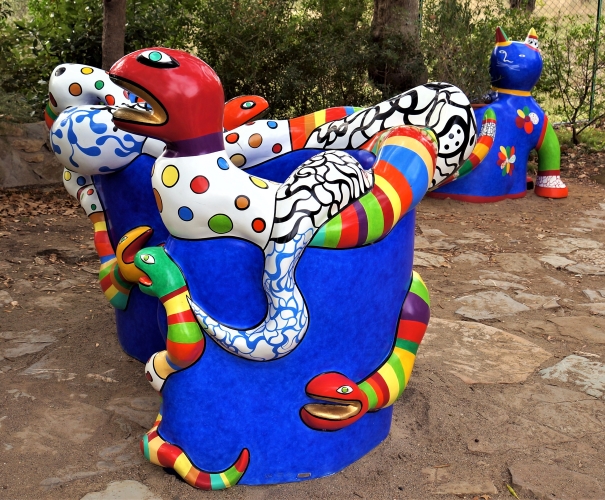
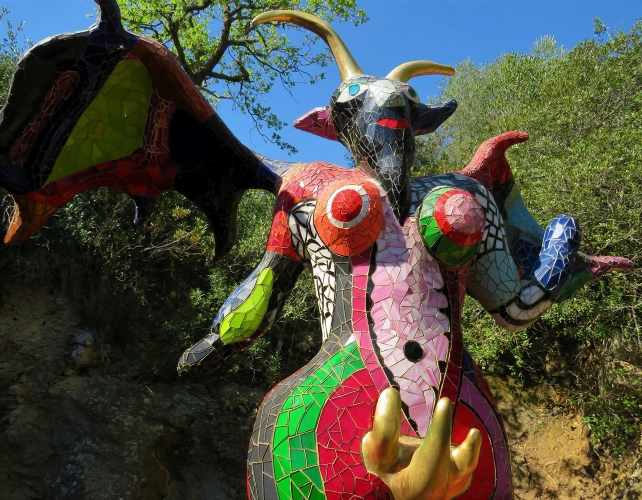
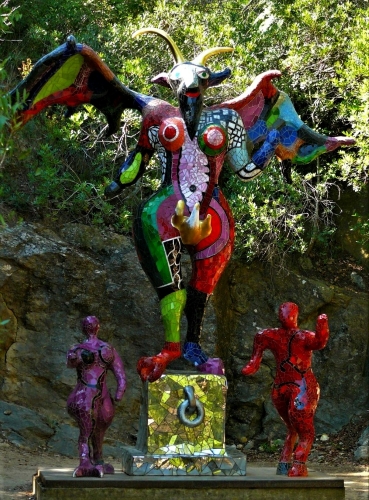
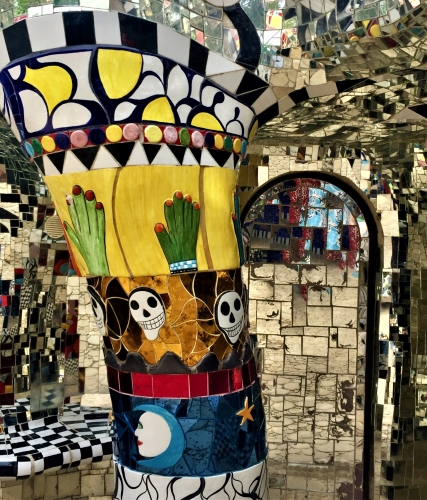
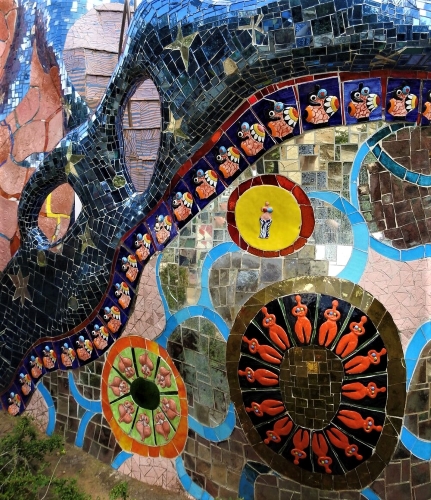
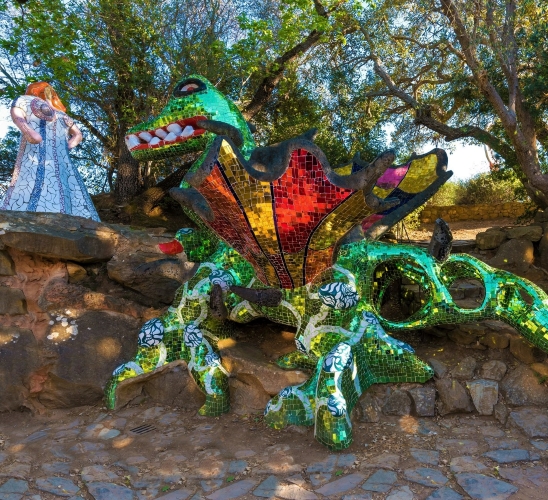
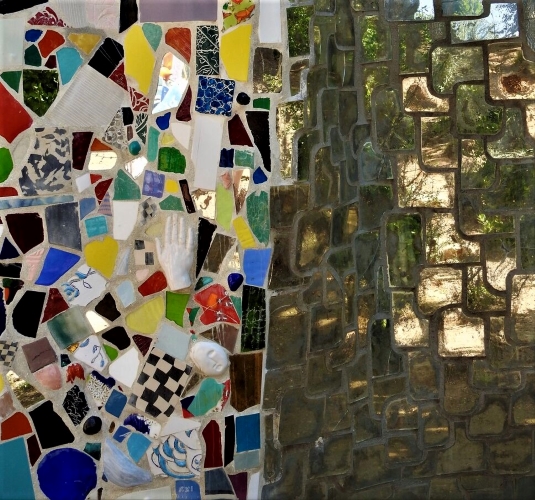
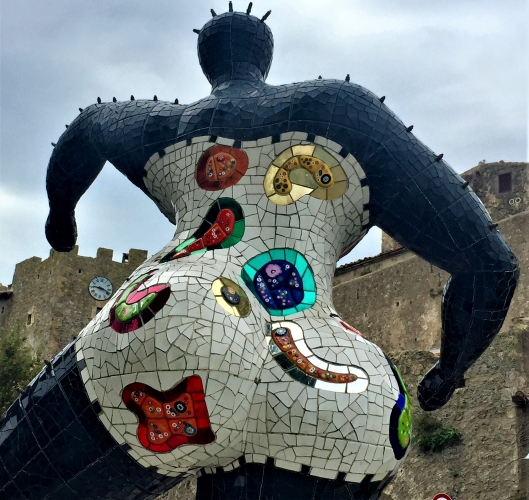
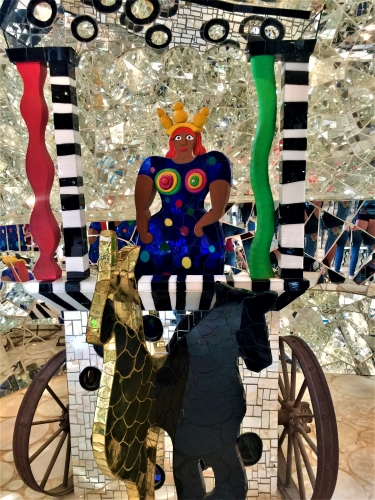
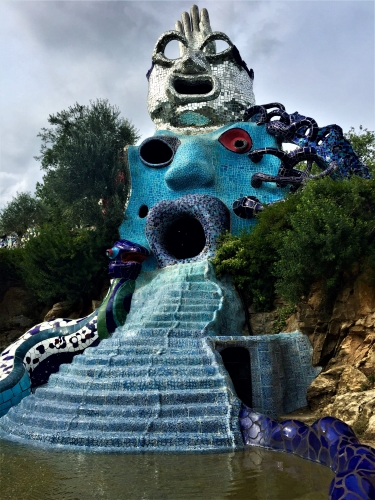
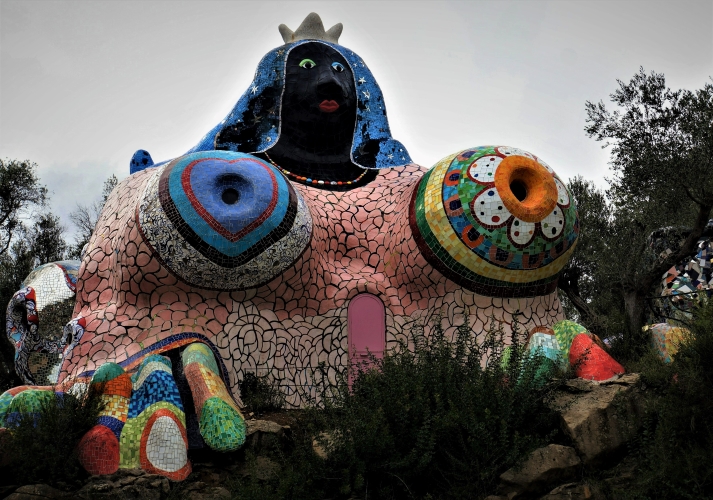
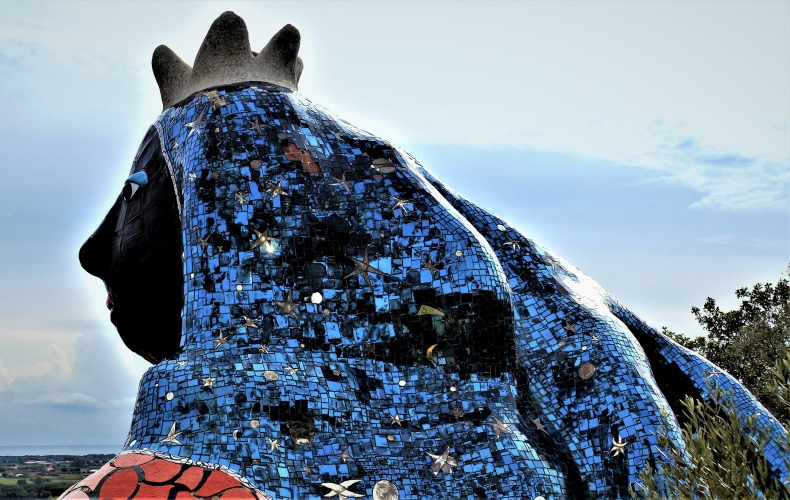
Not far from the fashionable harbor town of Porto Ercole on the Tuscan coast is the little known Giardino dei Tarocchi – The Tarot Garden – where, for an enchanting afternoon, you can experience a whimsical alternative reality. An enchanting modern sculpture garden beckons with a surrealist landscape of twenty-two vibrant, massive, fantastical, multicolored depictions of the Major Arcana depictions of the Major Arcana of the mystical and mythical Tarot cards
The garden is the public art masterwork born of the fertile imagination of self-taught French-American artist Niki de Saint Phalle. A vibrant celebration of feminism, the garden represents a beguiling fusion of pop, folk, outsider art and surrealism. A great lover of Italy, de Saint Phalle was granted the land to create her magical world after a chance encounter with Marcella Agnelli, sister of Fiat industrialist Gianni Agnelli. She began work in 1979 and the colossal project consumed nearly two decades of her life.
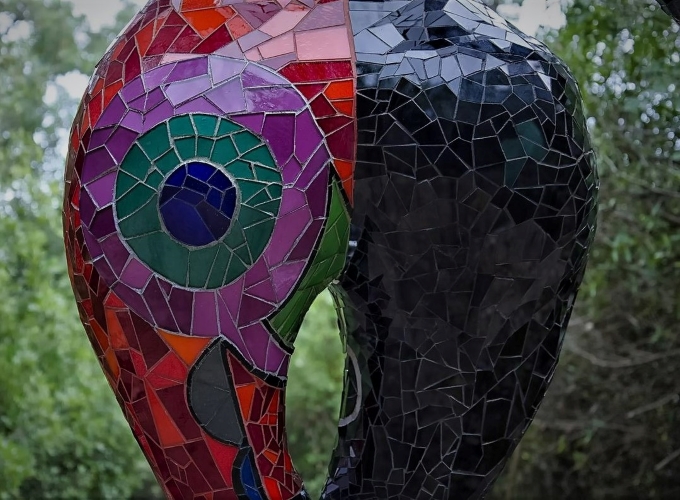
Fully immersed in personally designing and building the statues (most measuring between 39 and 49 feet tall), de Saint Phalle hand-painted and decorated each with ornately detailed mirrors, mosaics, multi-colored ceramics and Murano glass, creating a kaleidoscope of colors, textures and shapes. The garden’s largest sculpture is of the Empress, symbolizing the great mother archetype as voluptuous woman-sphinx. An enormous hollow shell, its interior served as de Saint Phalle’s home while she worked on the garden. One of the figure’s breasts housed a lavishly-embellished living, dining and kitchen area and the other, a bedroom and bath.
Throughout the project’s lifespan, the artist enlisted a group of skilled collaborators in her “garden of joy.” Chief among those was her husband, Jean Tinguely, whose mechanical skills helped motorize and breathe life into several of the garden’s features and monumental sculptures. But the overall phantasmagorical design could ultimately be the brainchild of only one supremely gifted individual.
In Giardino dei Tarocchi, a visitor can not only admire the art but interact with it, whether climbing the Tower or playing the Wheel of Fortune. Niki de Saint Phalle meant for her Eden-on-earth to be touched and enjoyed by adults and children alike with all their senses . . . an evocation of – but also a brief respite from – the lifelong game of chance that is the story of the tarot.
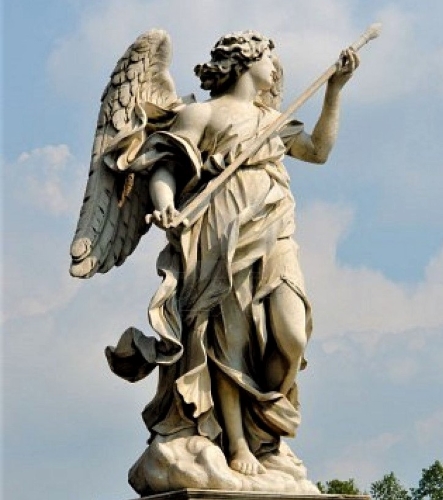
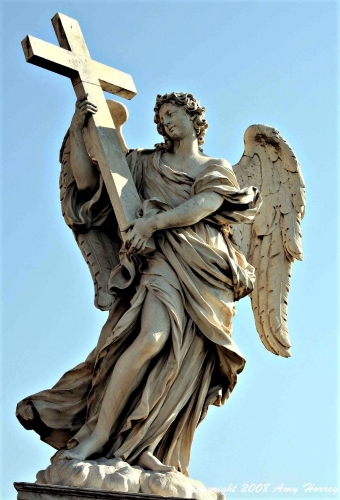
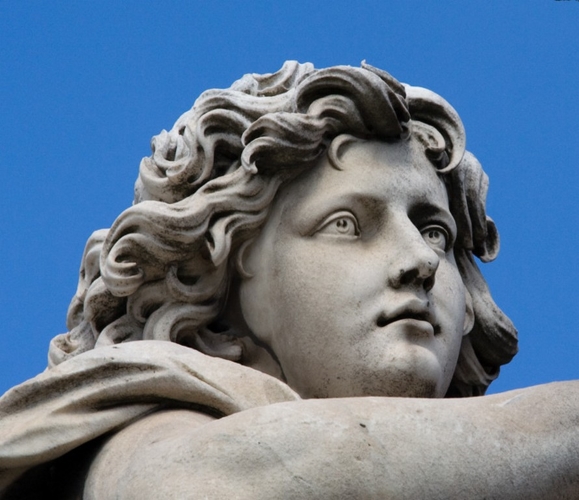
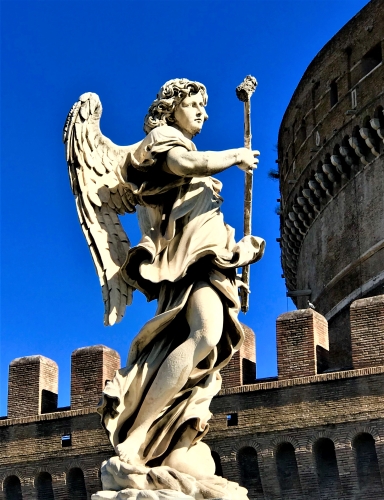
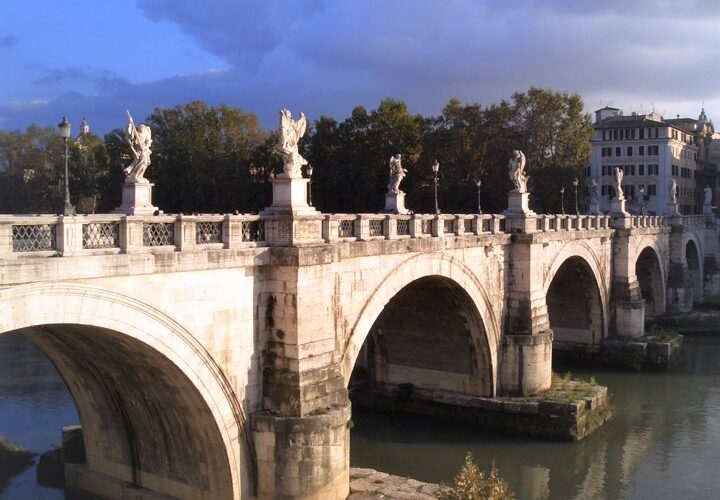
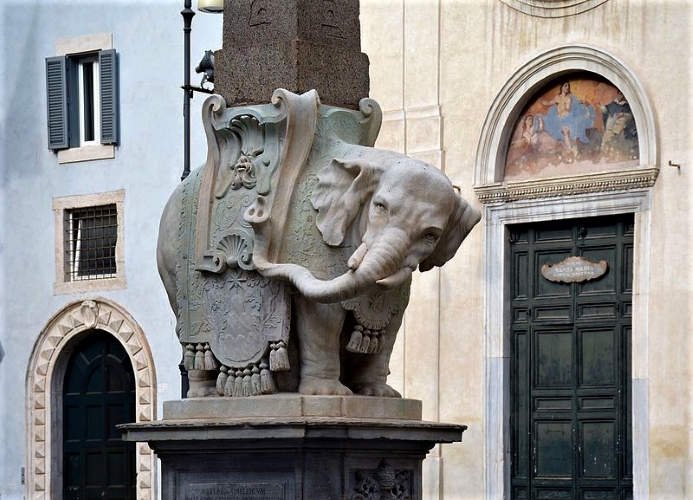
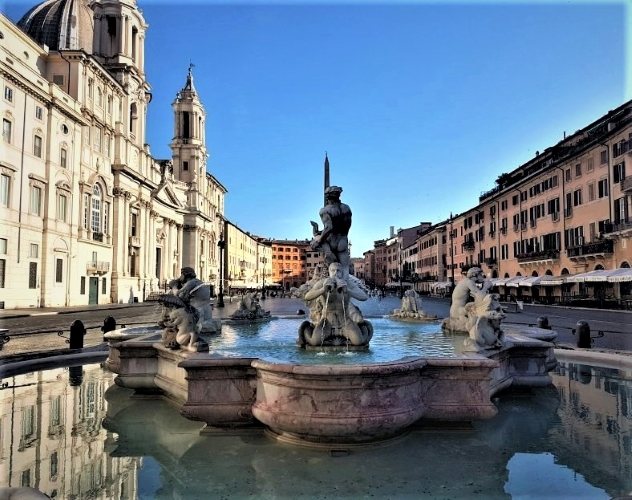
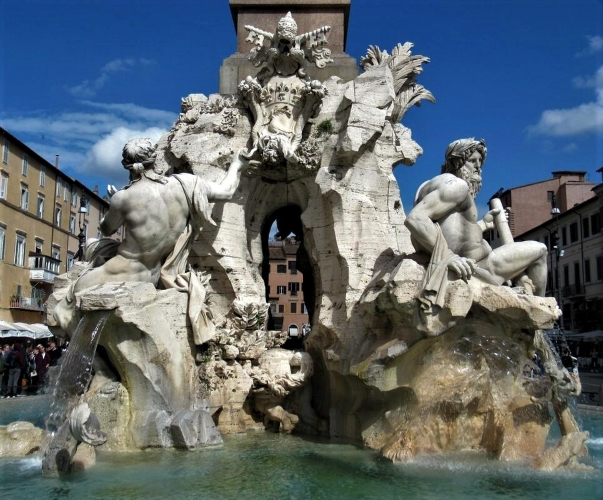
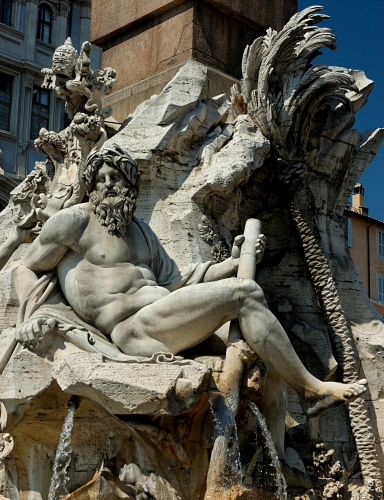
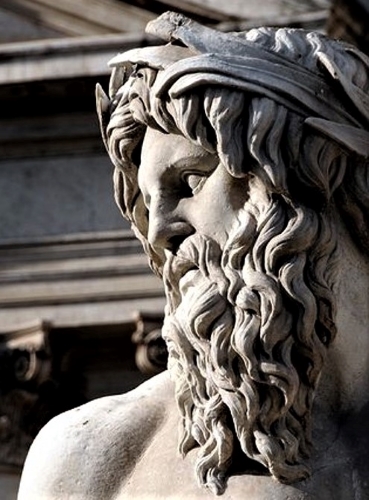
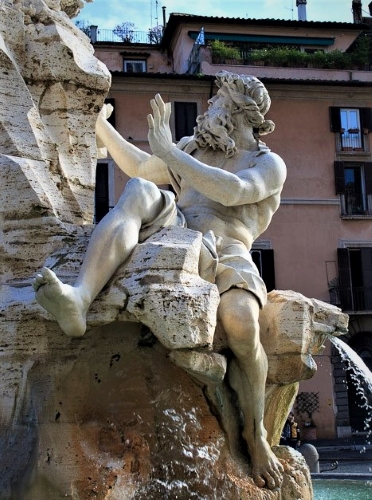
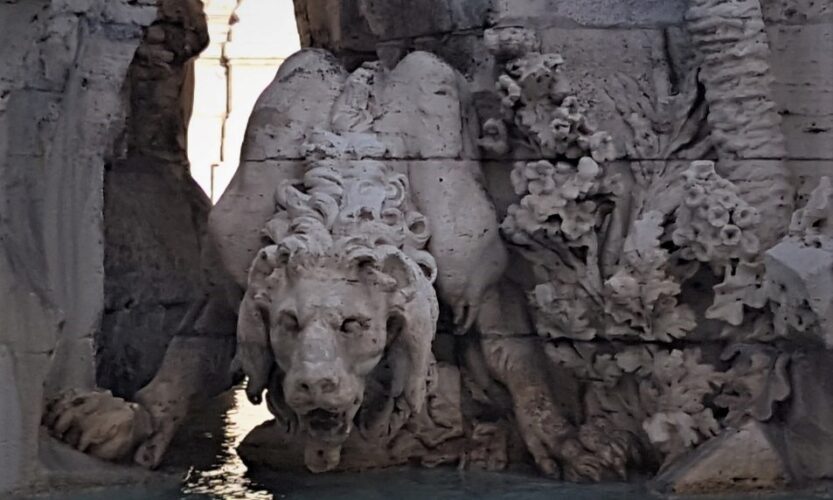
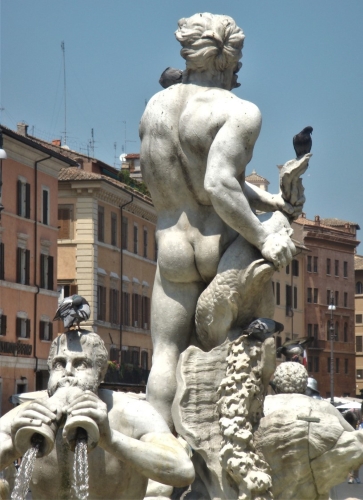
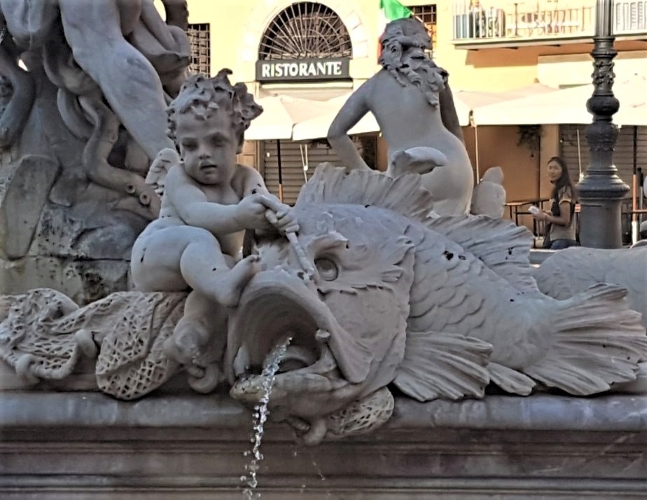
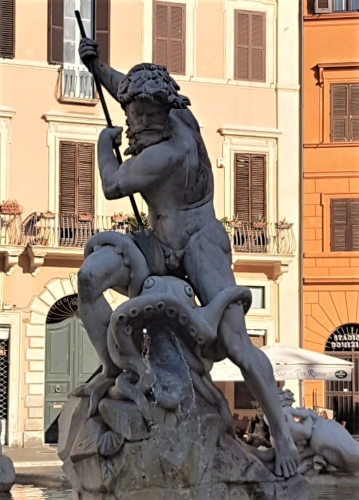
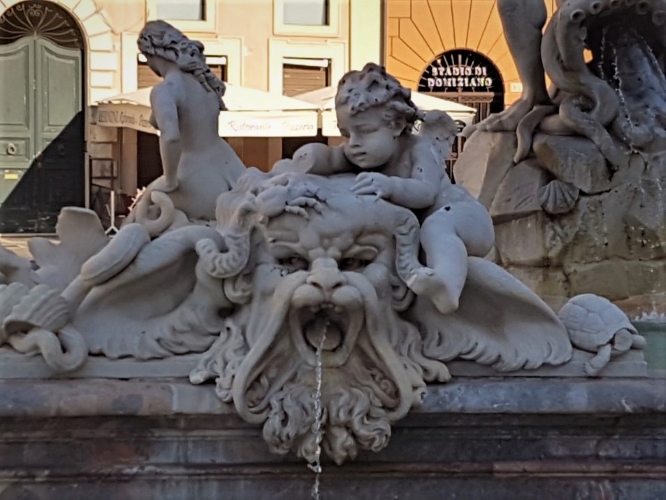
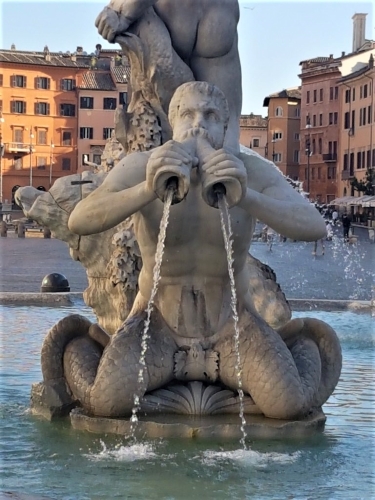
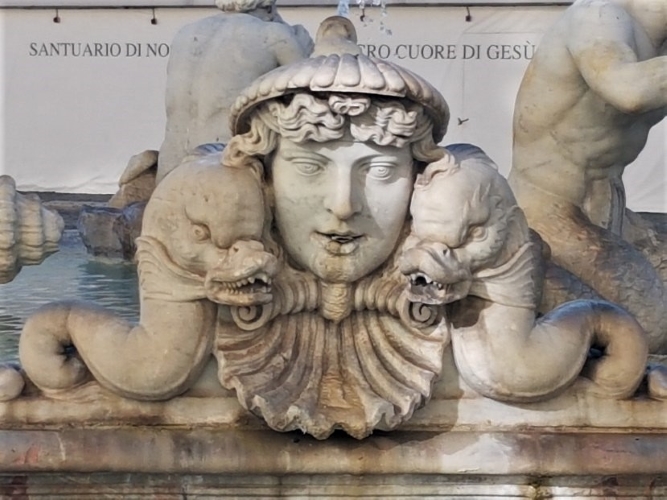
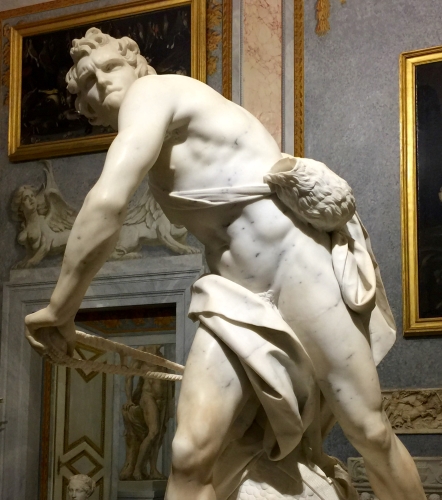
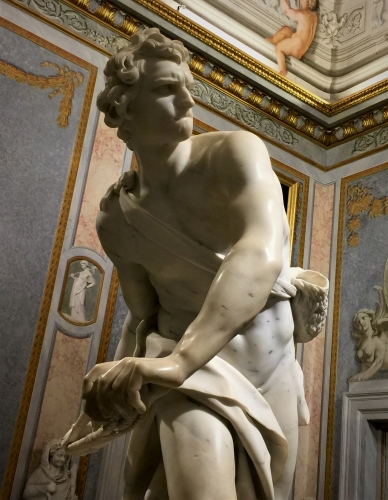
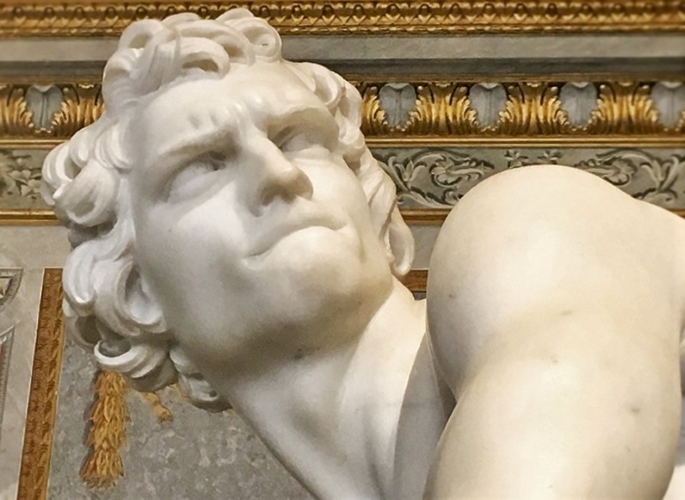
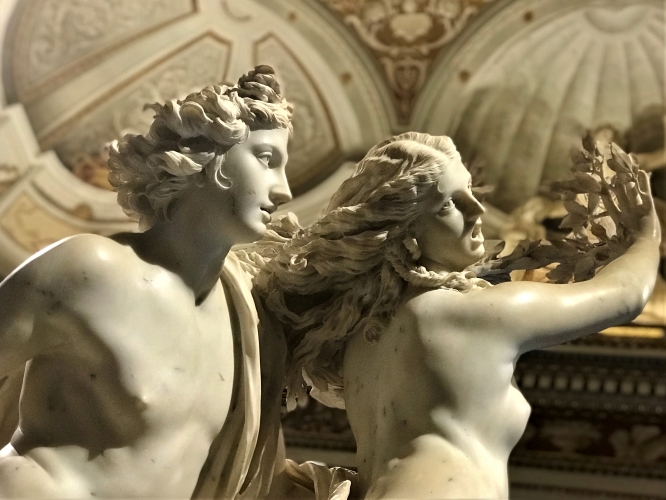
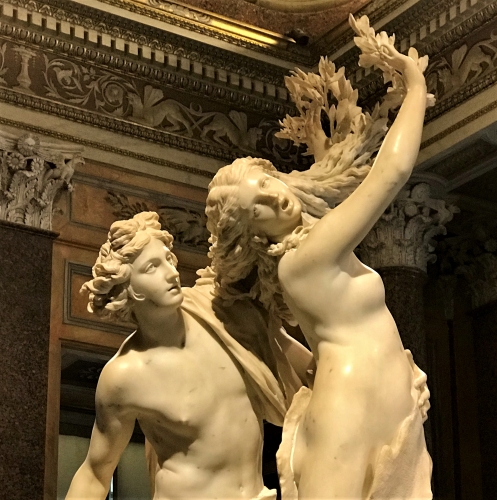
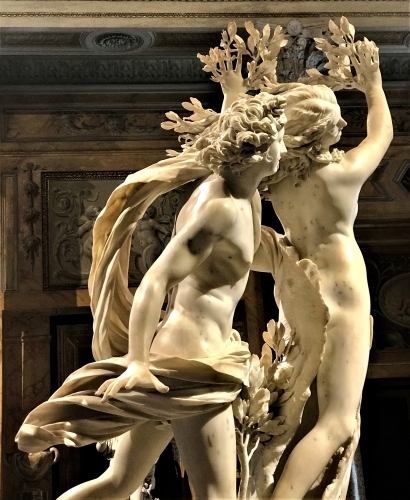
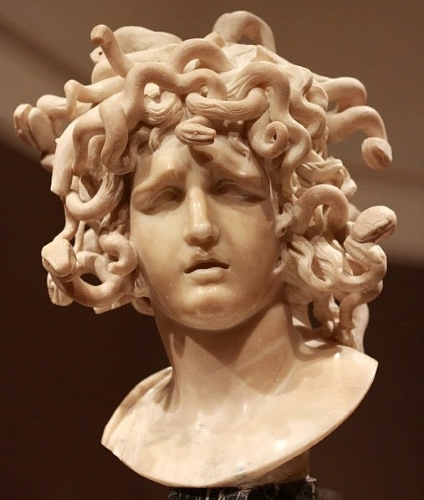
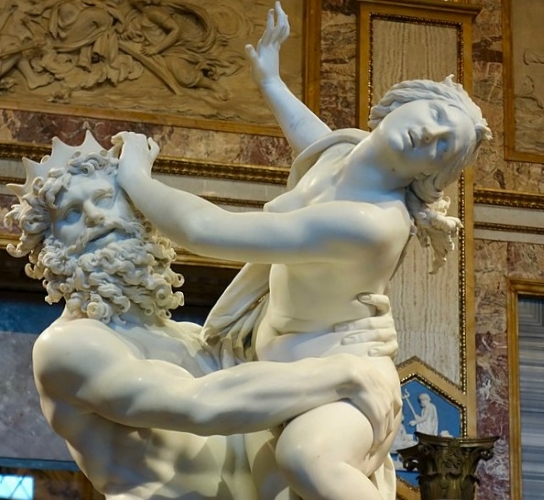
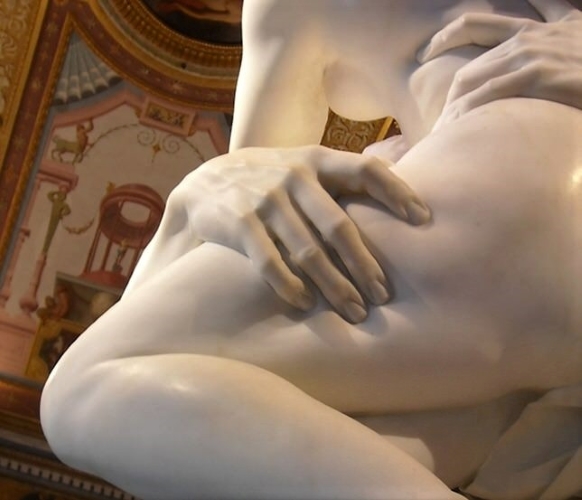
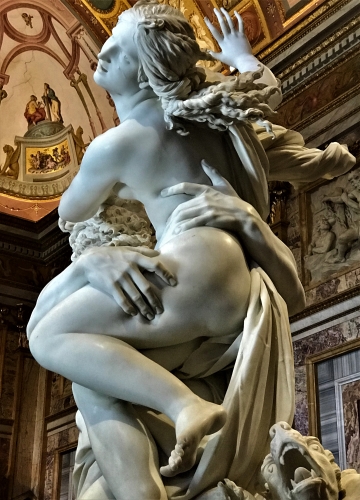
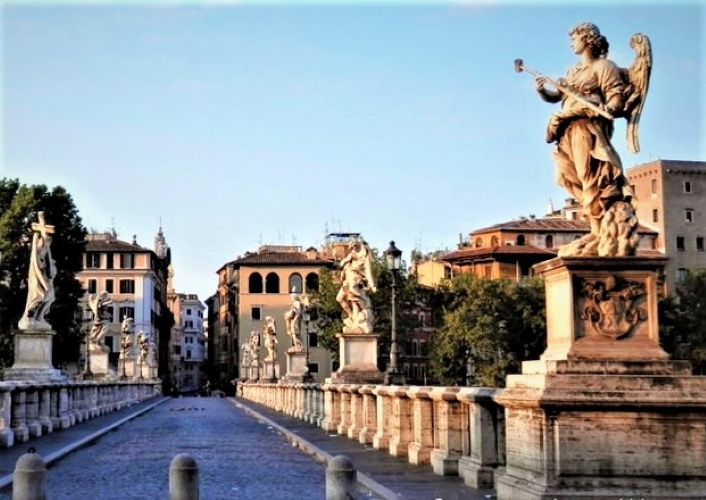
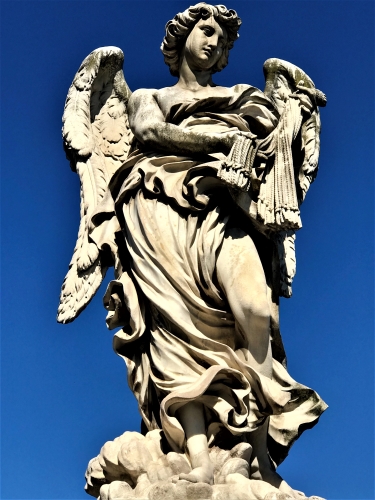
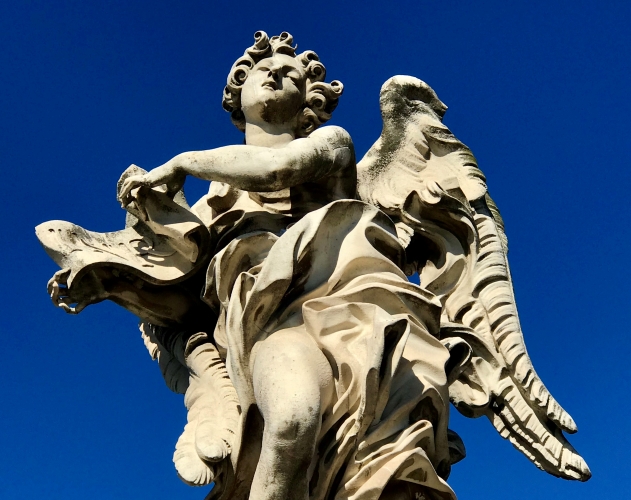
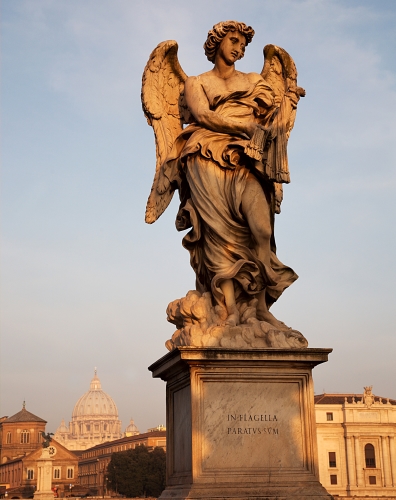
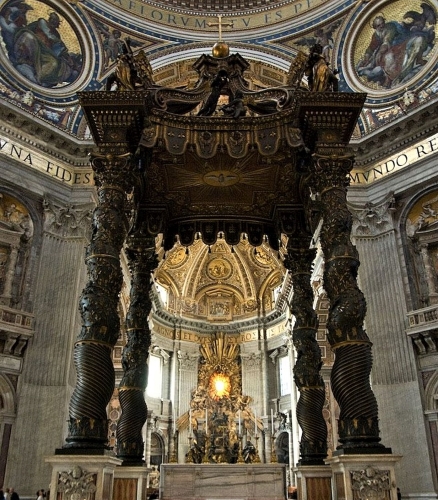
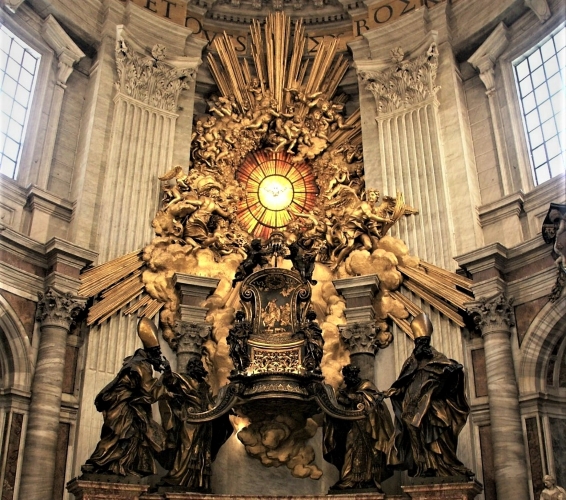
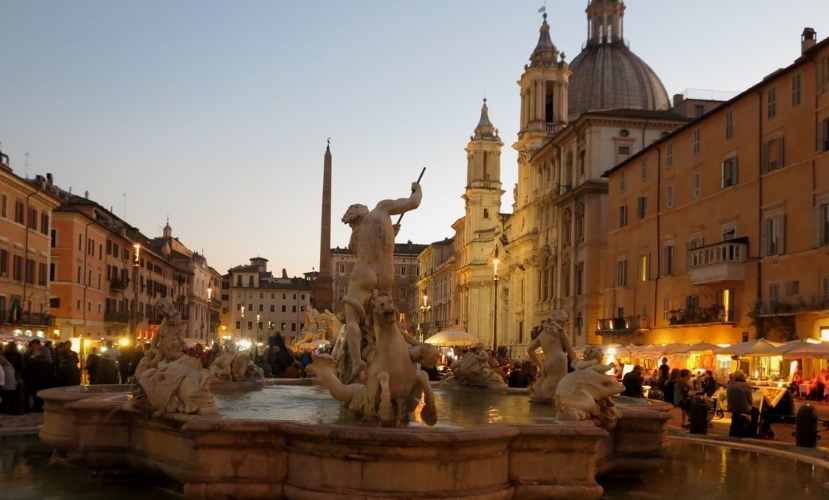
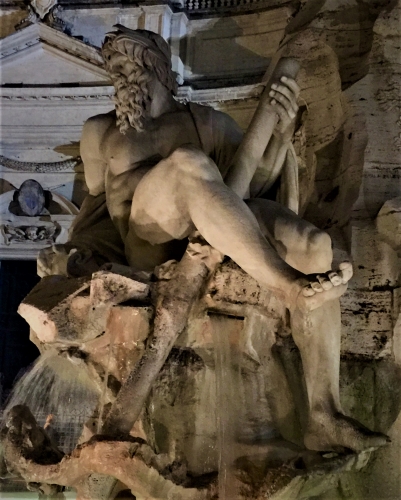
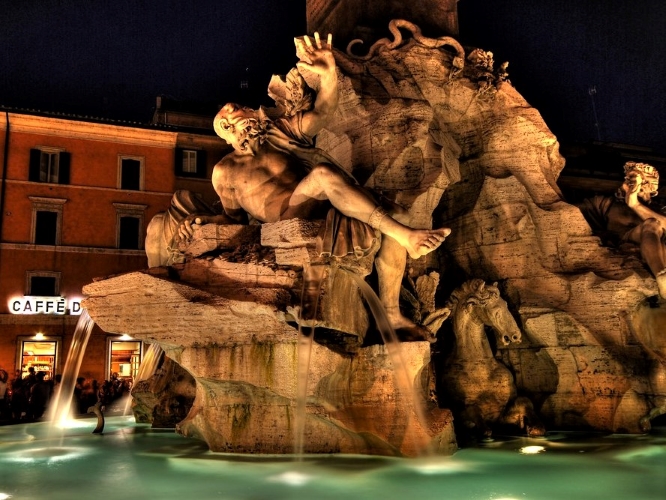
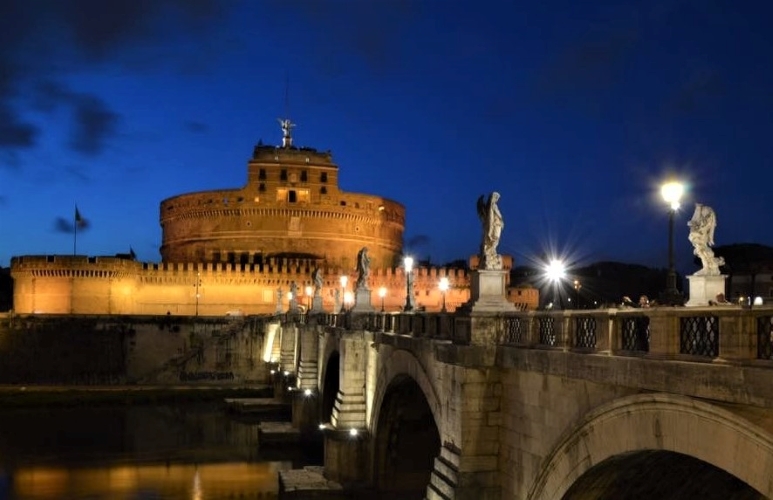
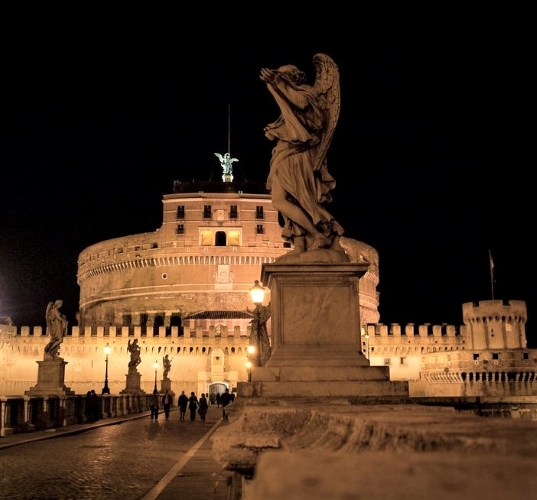

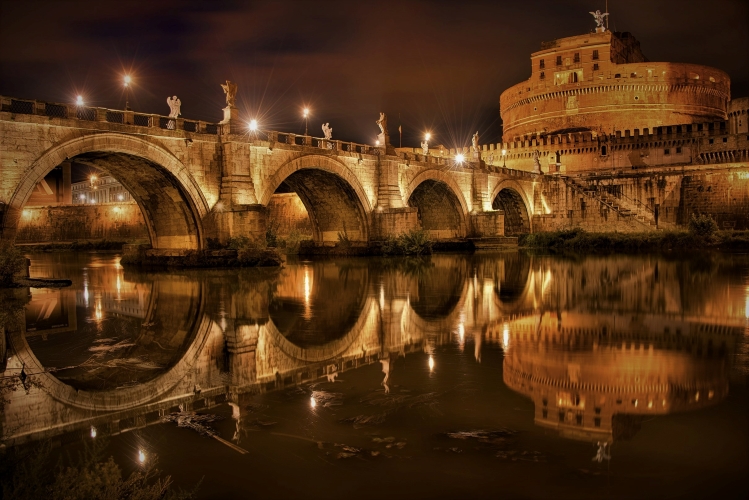
Nothing quite surpasses the grandeur of the Eternal City this time of year and it is difficult to recall a single person who has had a greater influence on the look and life of a city than Baroque genius Gian Lorenzo Bernini has had on Rome.
Sculptor, urban planner, architect, master of stagecraft and gesture, Bernini engenders awe in the beholder with his exuberant style.
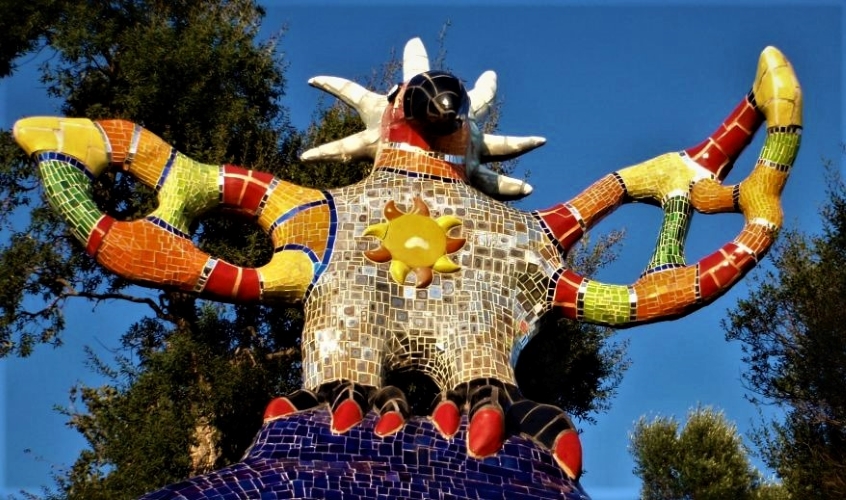
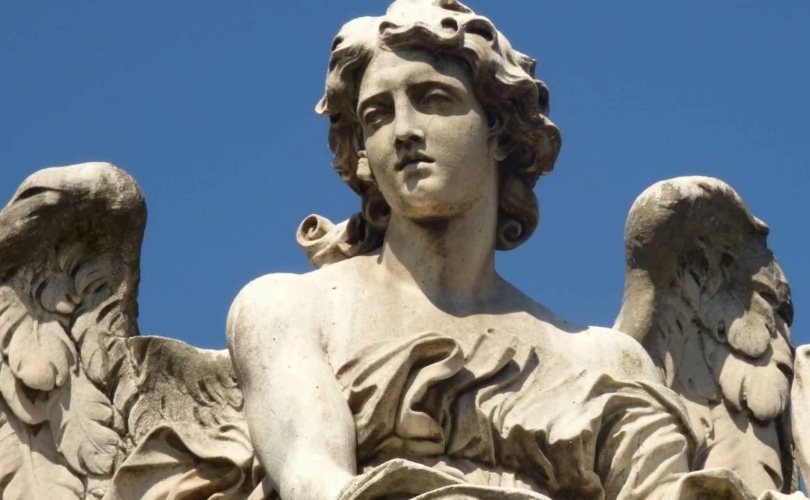
Connecting the Eternal City to Vatican City is the Pont Sant’ Angelo, one of the most serenely beautiful bridges in the world. Bernini designed it as a “living” Via Crucis (Way of the Cross) to help pilgrims emotionally experience in the suffering of Jesus.
Bernini was able to transcend his preferred medium of marble to achieve visual and emotive effects never before imagined. A visit to the Borghese Gallery for me is always a “must” when in Rome. The astonishing Apollo and Daphne, Rape of Proserpina, and his David were all completed before he was 25 years old!
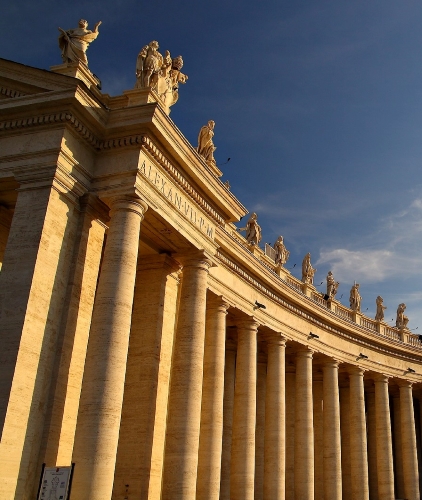
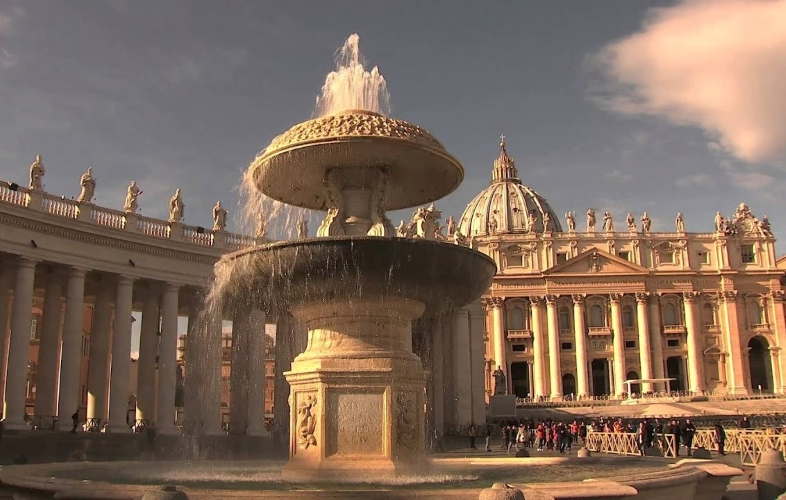
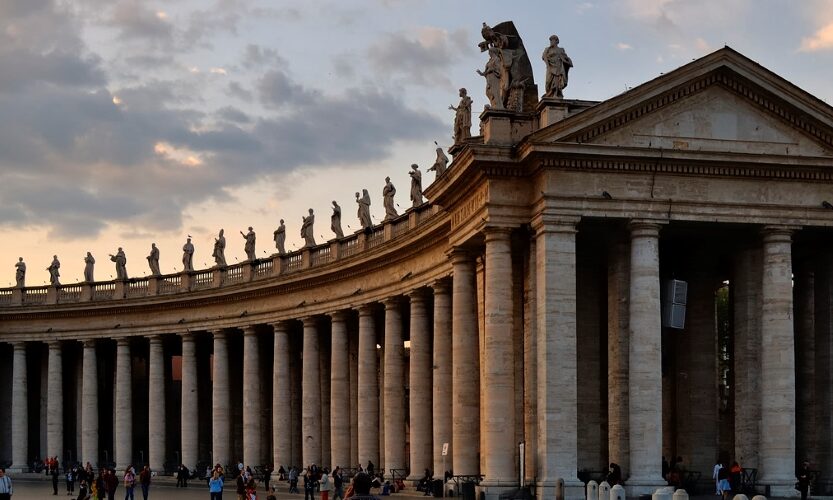
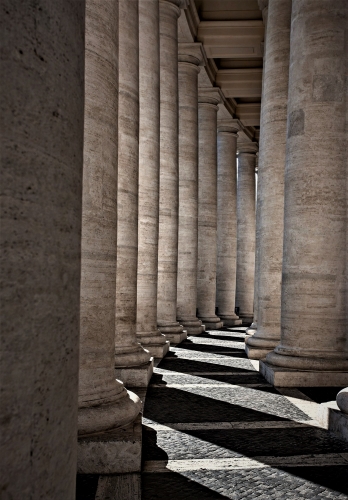
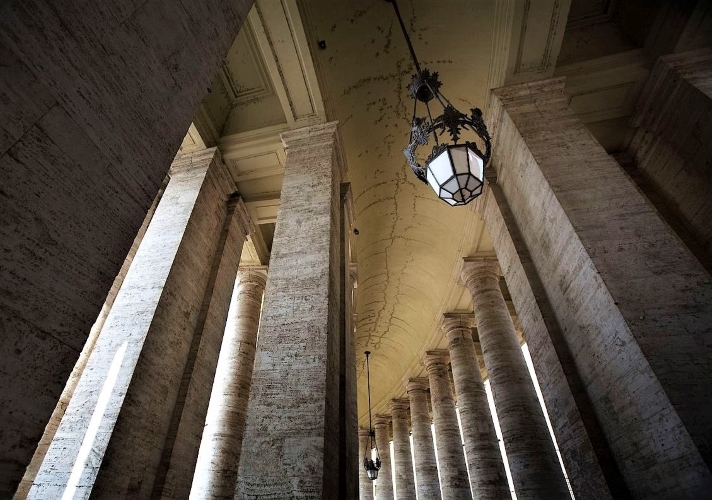
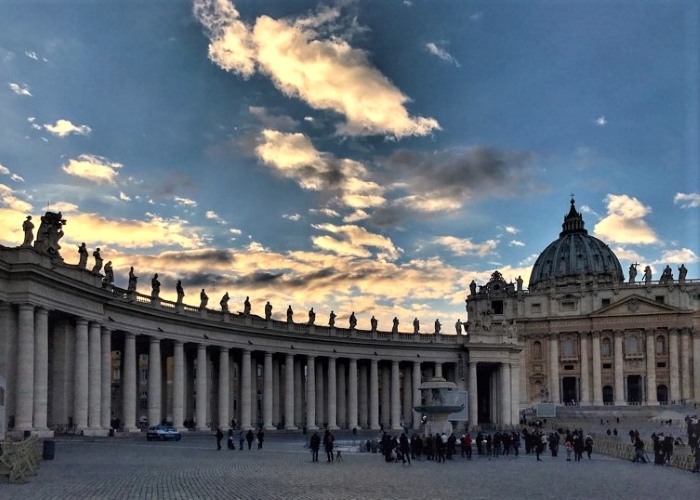
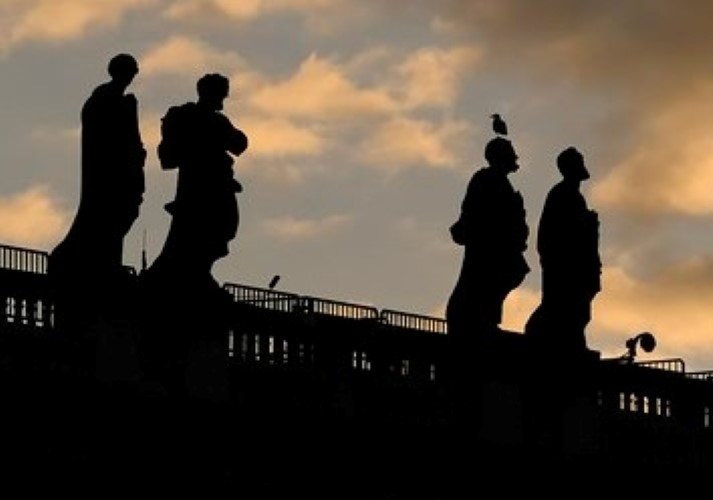
From 1667 on, pilgrims to St. Peter’s arrive at the grand elliptical piazza with its two burbling fountains and an Egyptian obelisk standing at its center and at the far end the façade of monumental Basilica. The piazza itself is encircled by two colossal Doric colonnades four columns deep with a total of 140 statues of saints lining it’s rooftop. This momentous piece of urban planning and architecture was the product of Bernini’s imagination; figuratively speaking he designed his colonnade to embrace pilgrims with in his words, “the maternal arms of mother church”
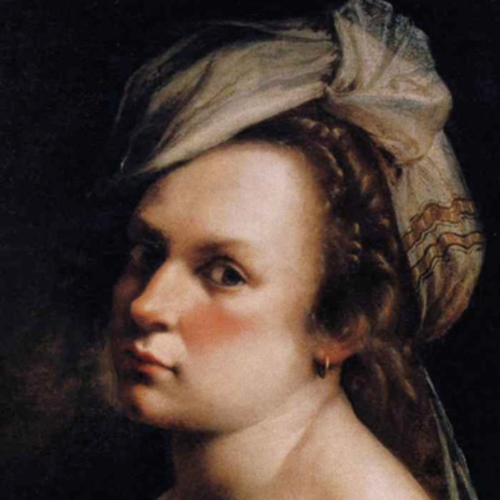
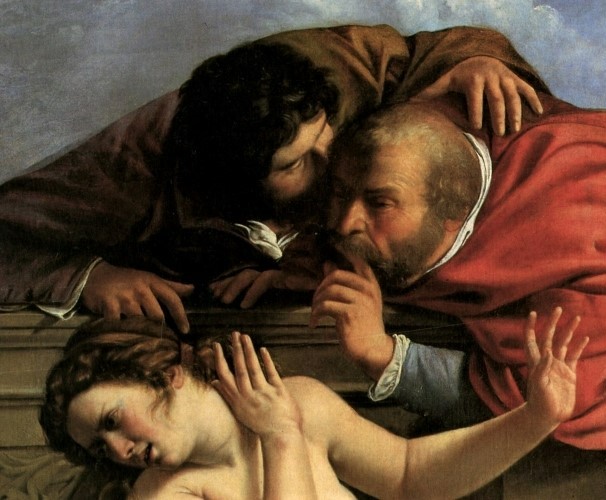
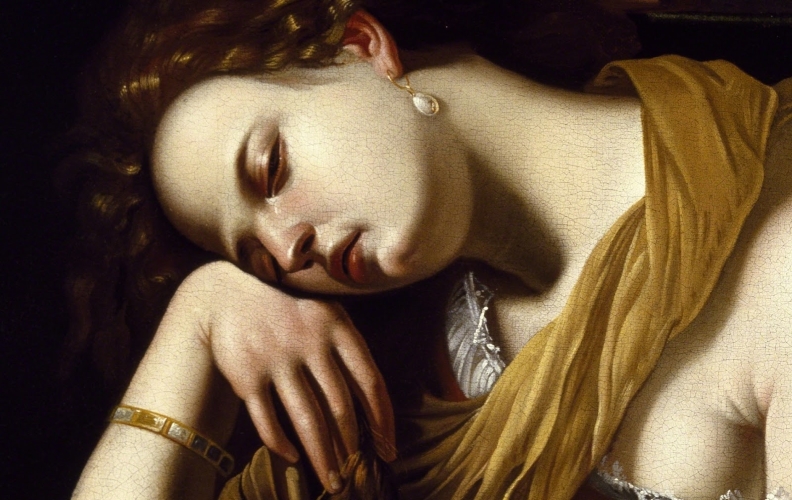
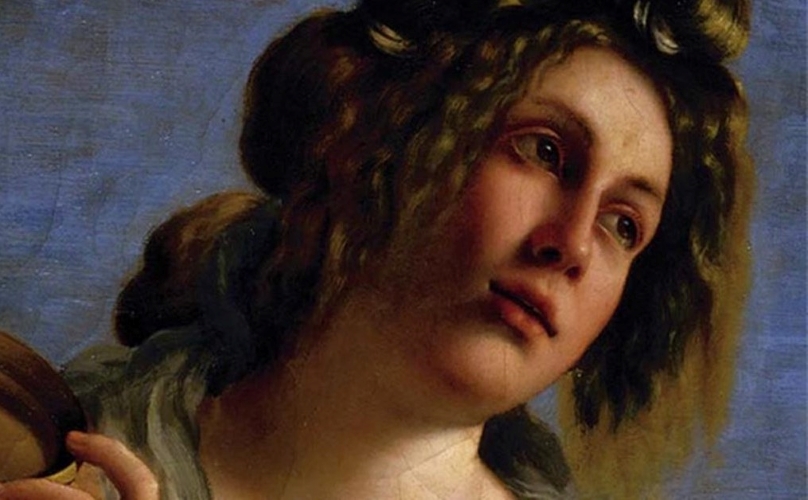
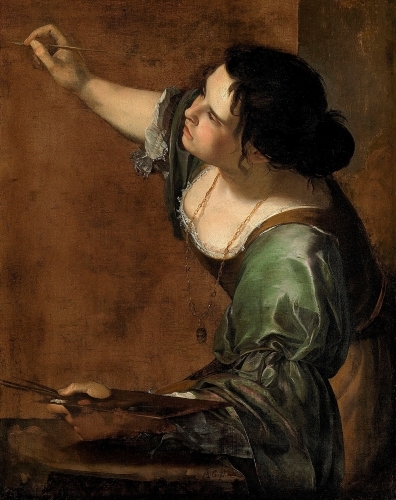
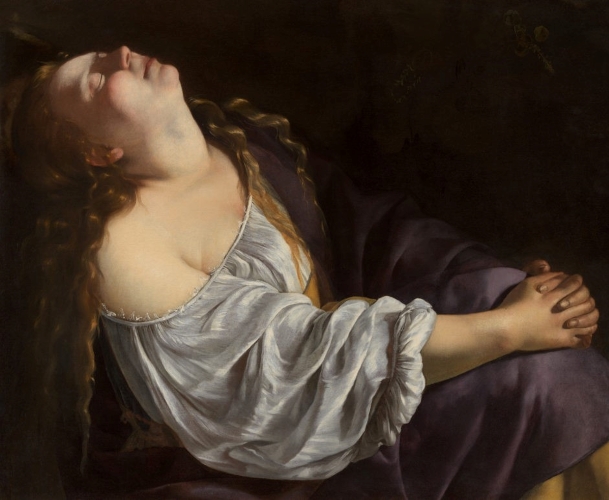
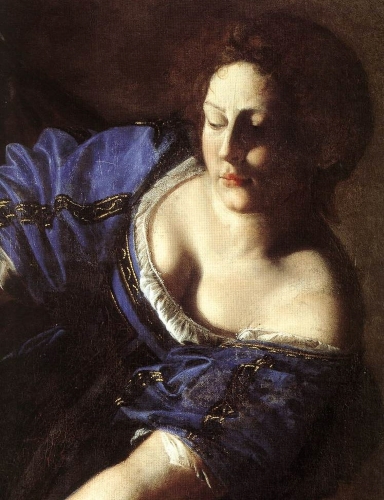
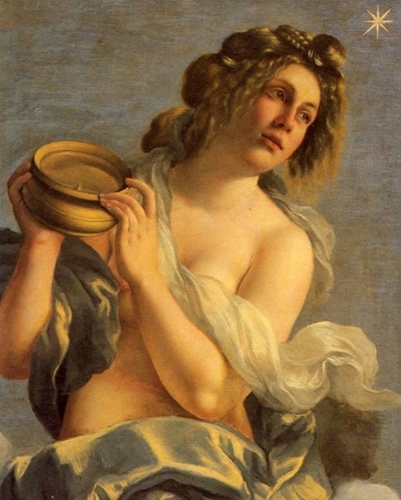
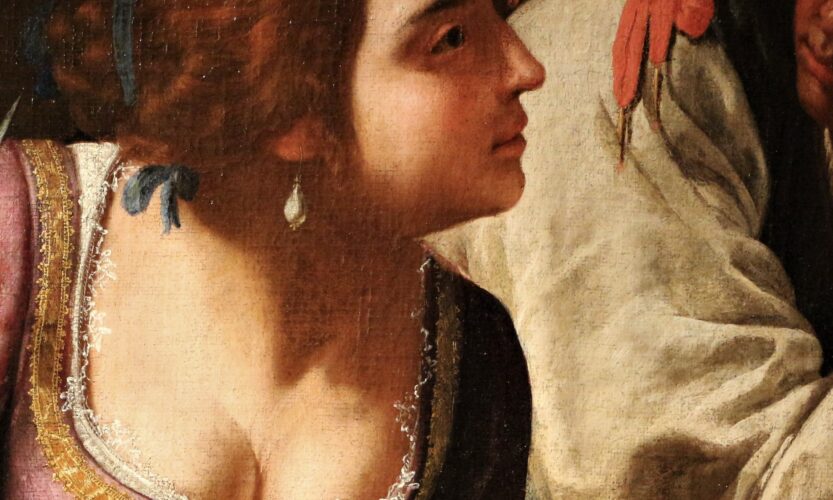
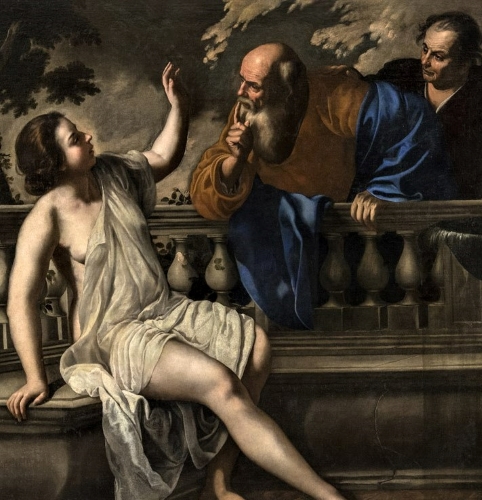
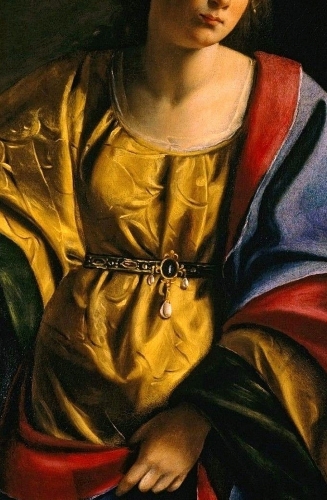
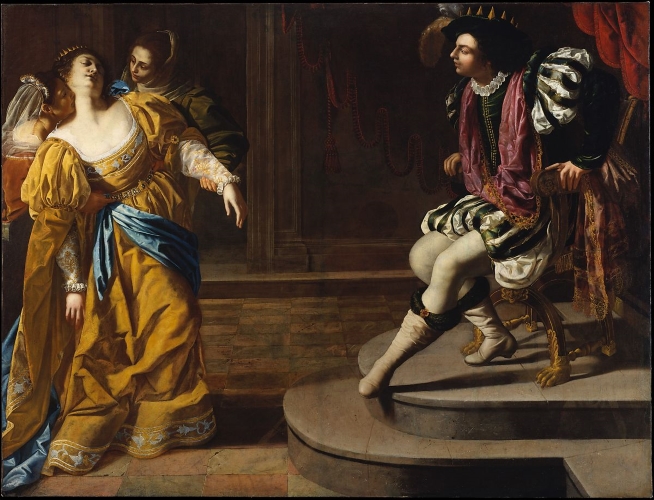
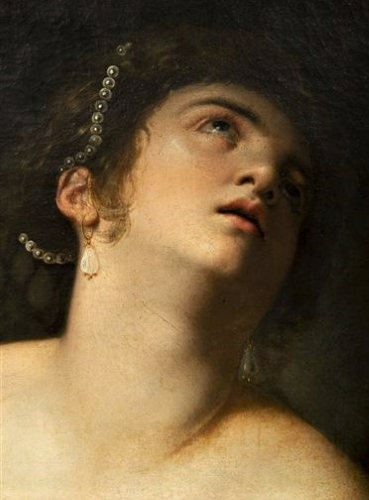
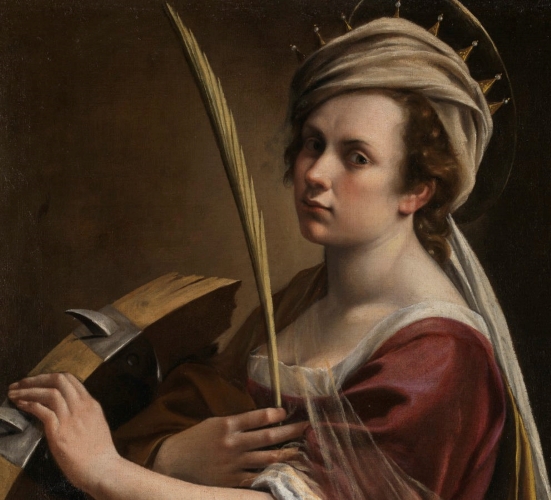
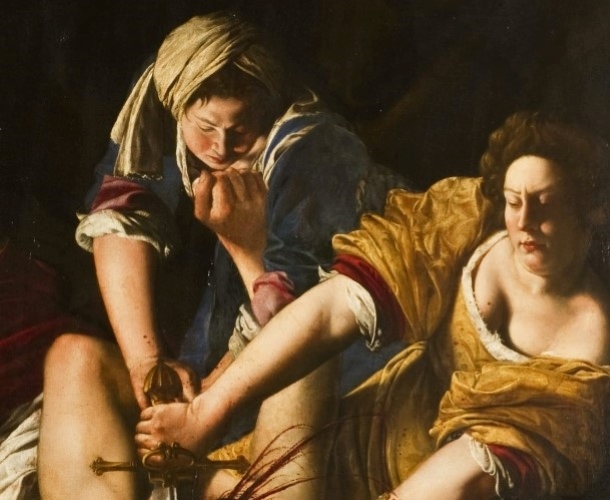
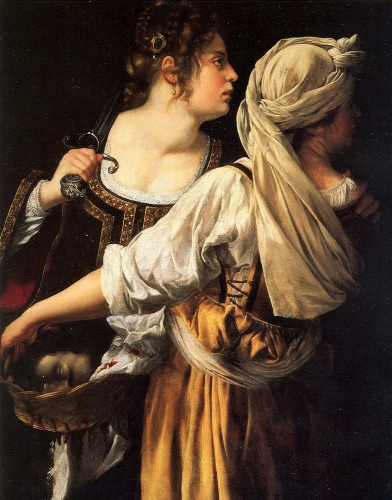
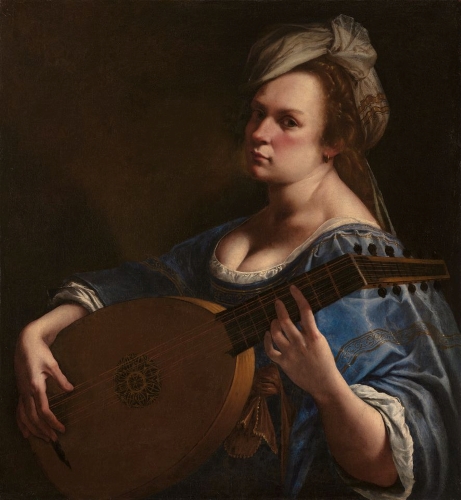
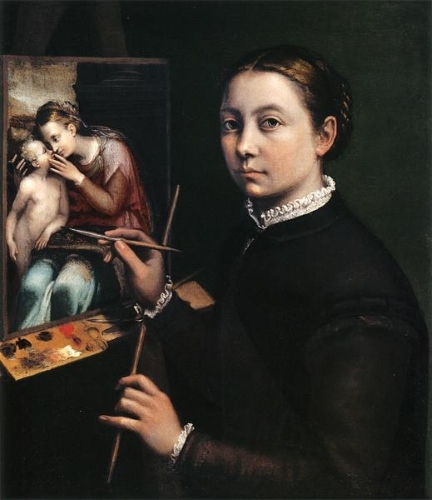
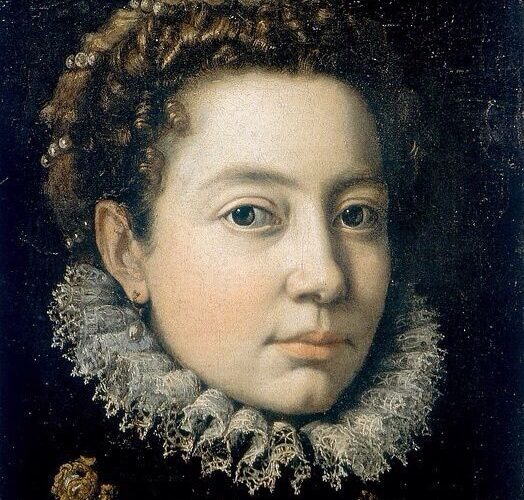
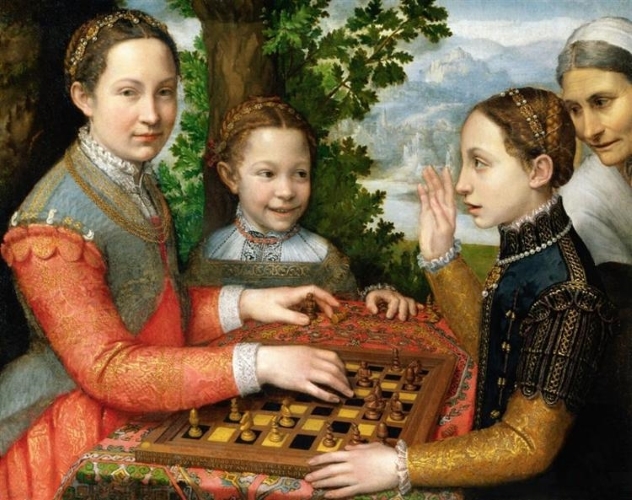
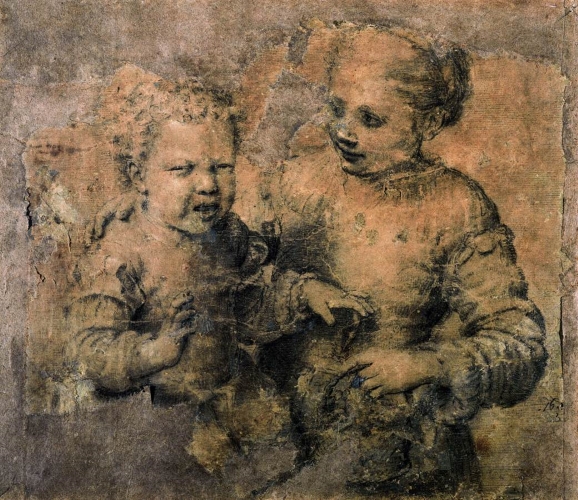
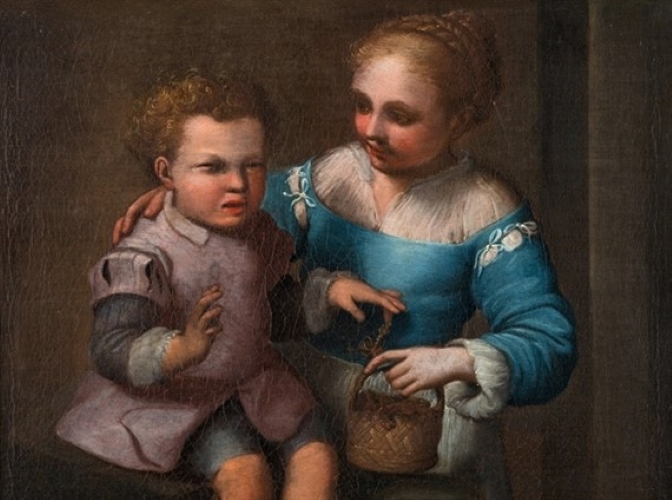
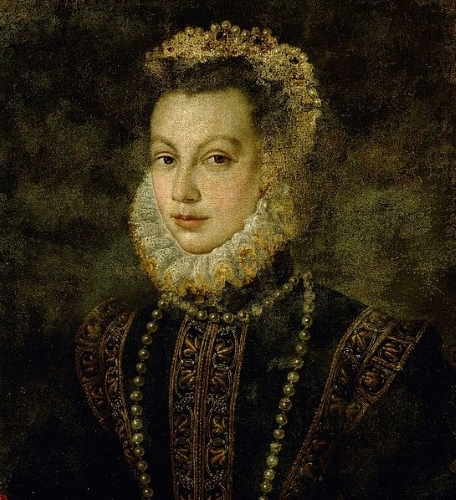
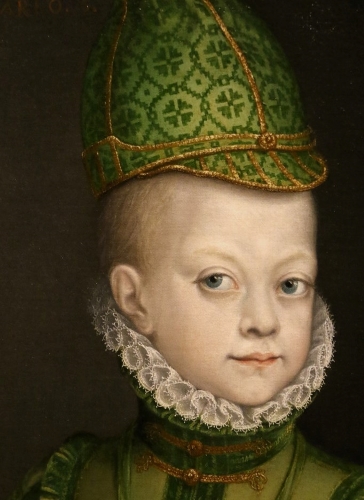
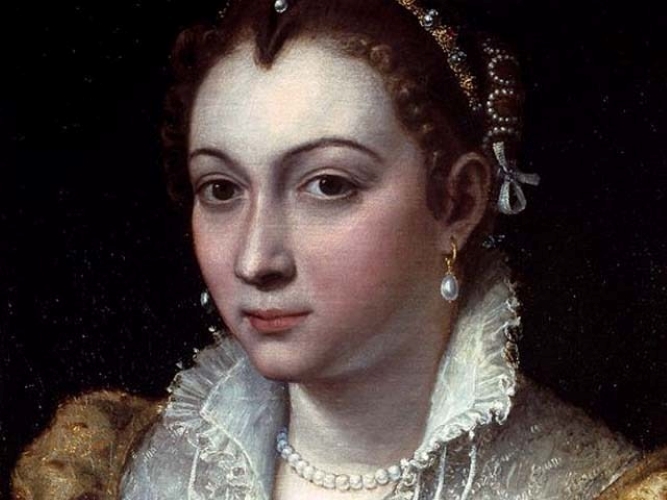
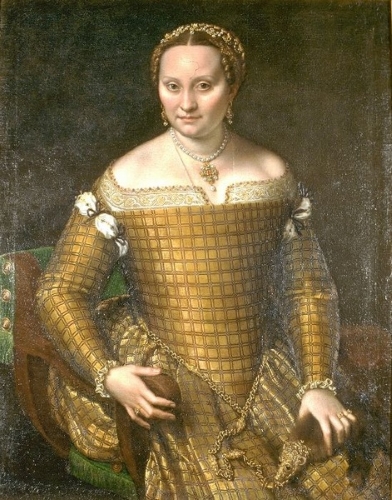
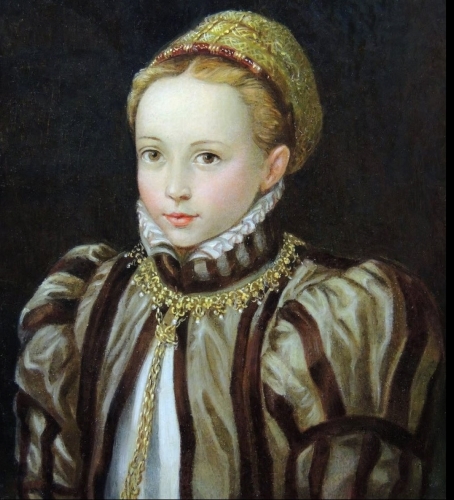
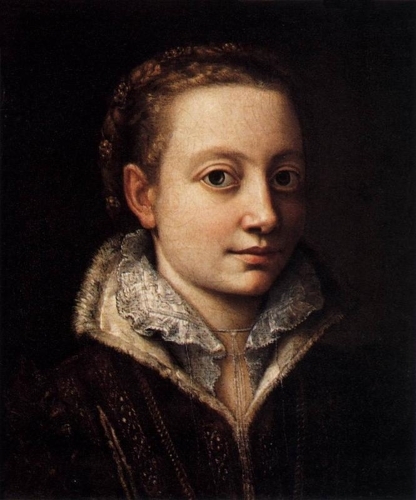
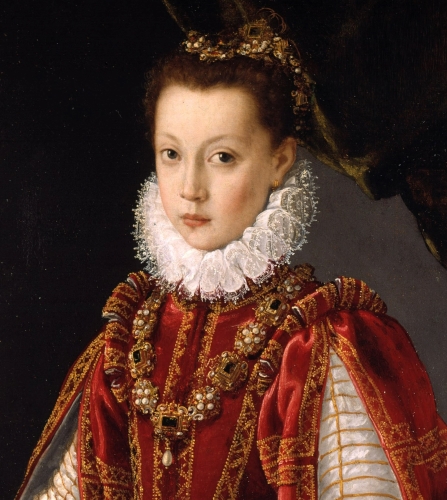
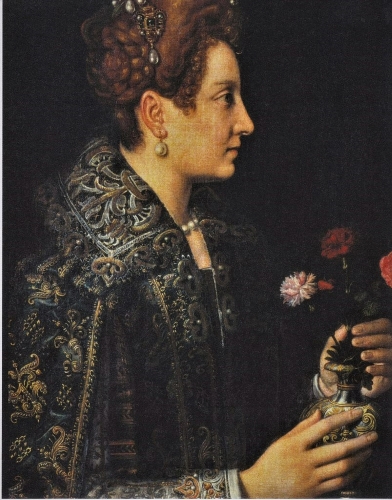
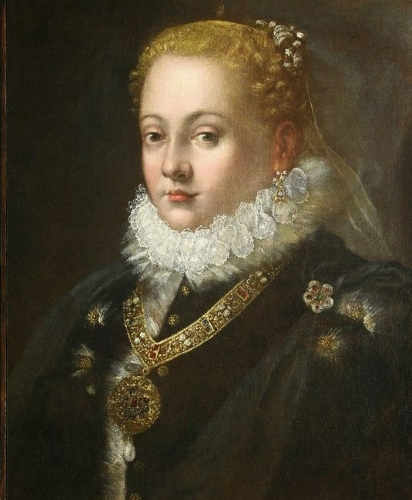
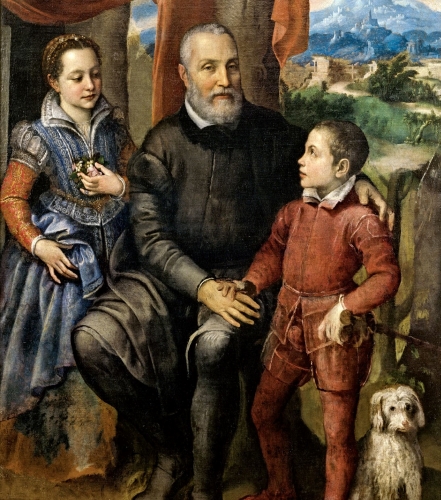
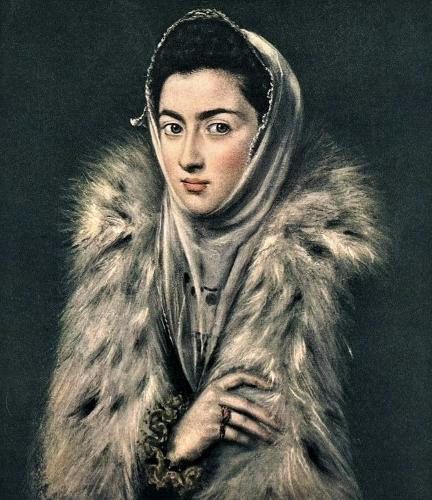
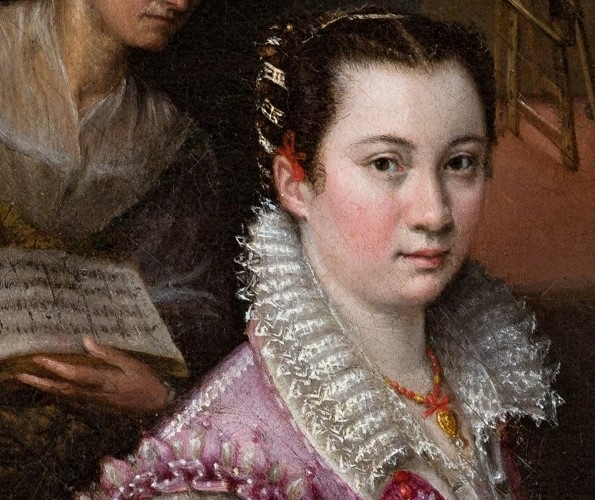
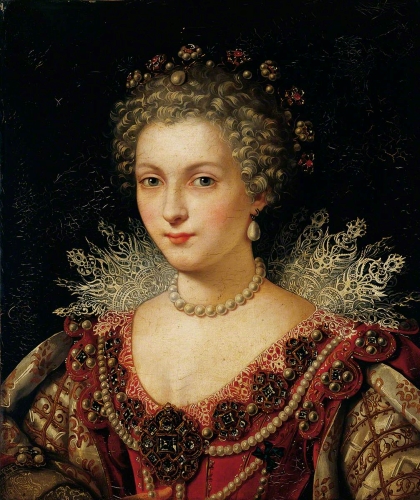
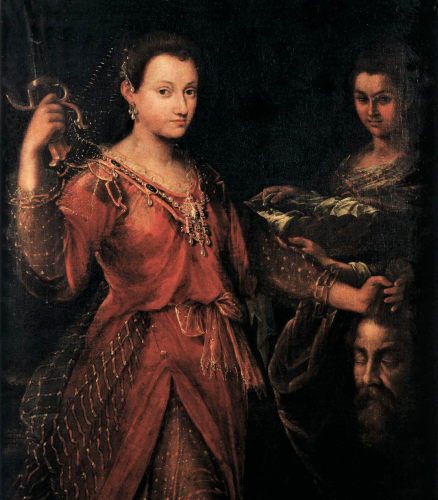
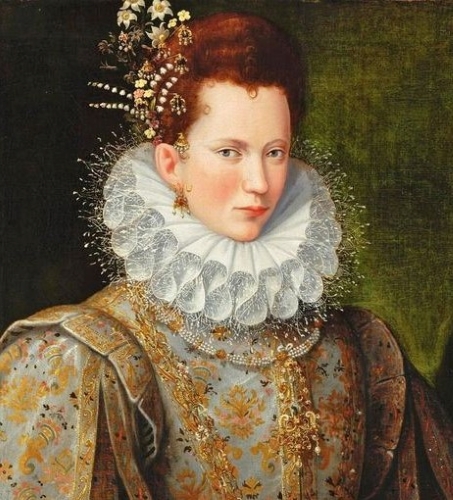
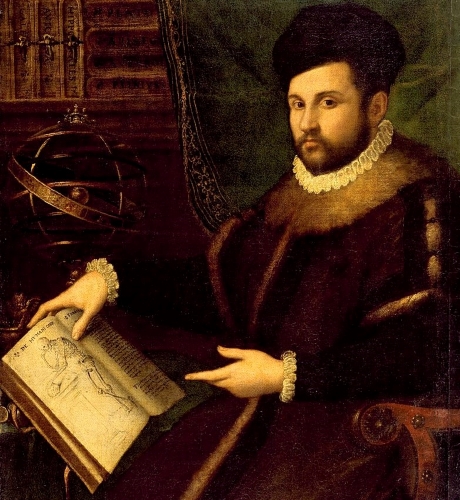
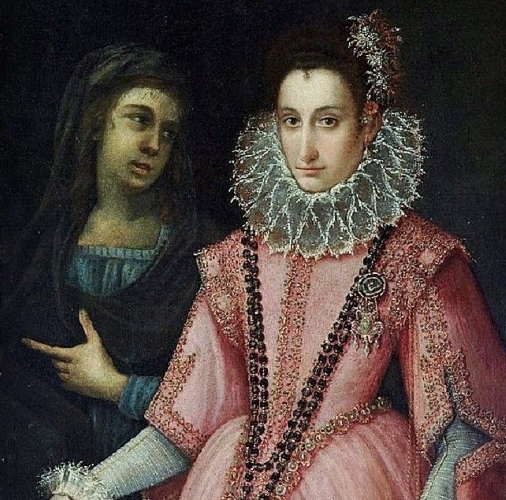
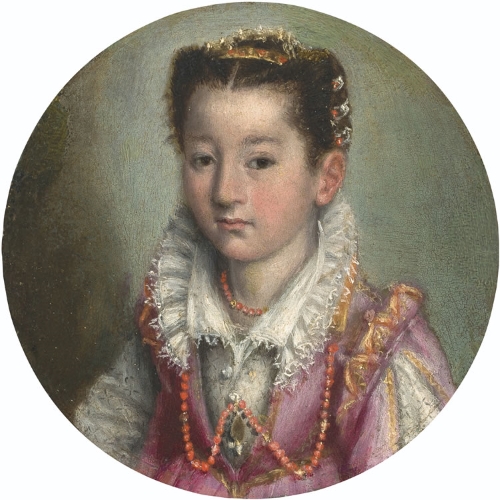
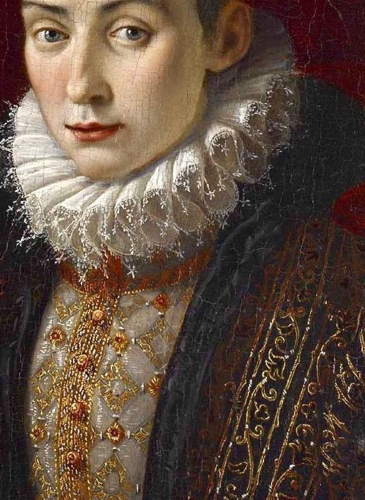
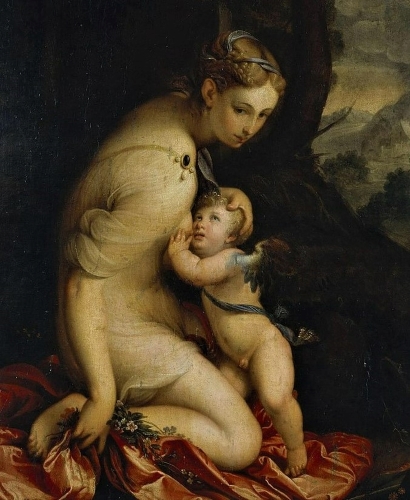
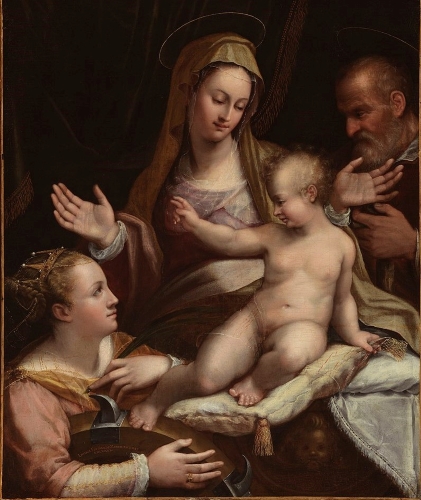
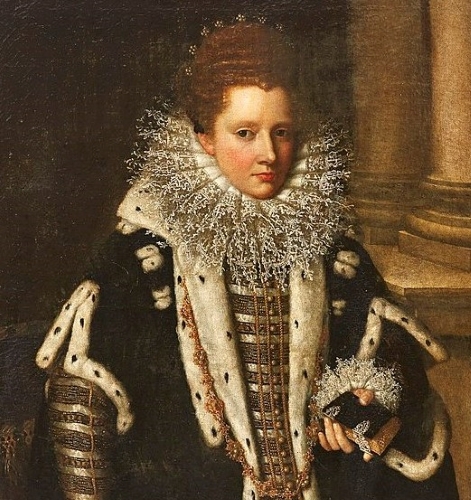
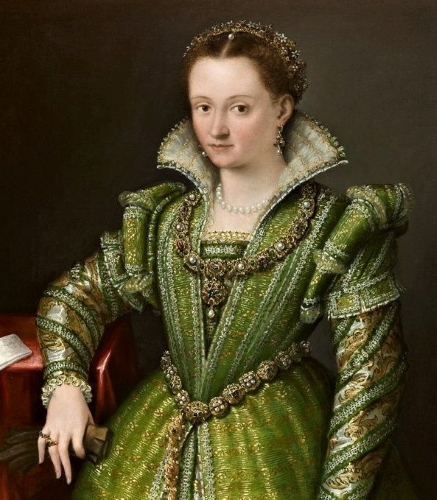
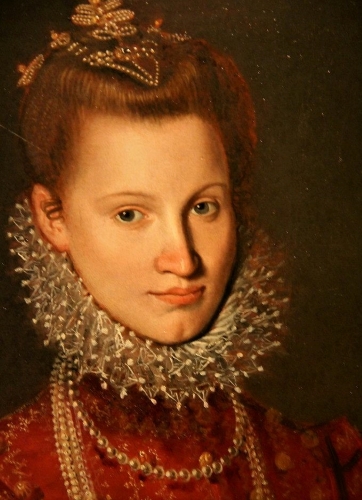
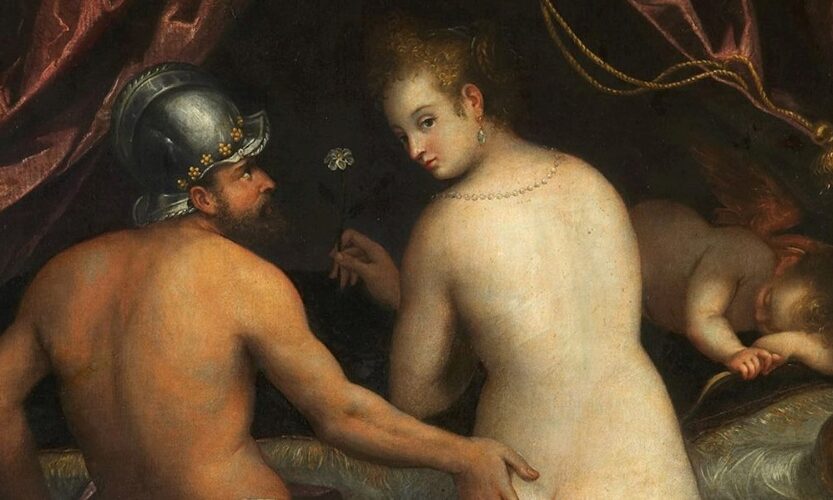
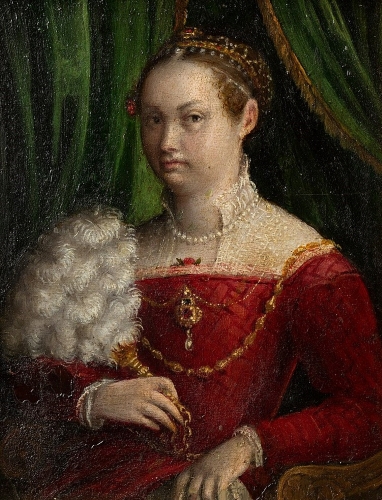
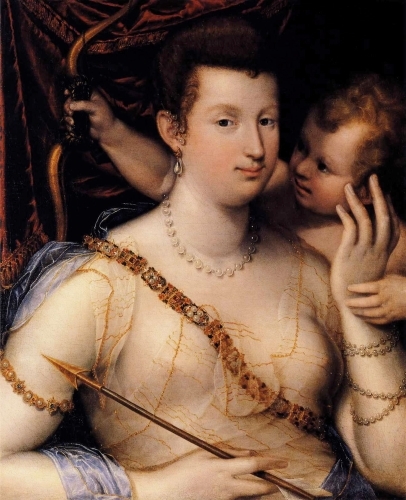
March is International Women’s Month, International Woman’s Day, March 8th, known as Festa della Donna in Italy, is when women of all ages celebrate each other with flowers, wine and torta mimosa. This is a special tribute to three trailblazing Italian women painters of the 16th and 17th century whose determination and prodigious talents were irrepressible. Their masterful works and legacies have only just began to be recognized.
Artemisia Gentileschi (1593 -1656) is the most celebrated female painter of the 17th century. She was born in Rome, the eldest of five children and only daughter of artist Orazio Gentileschi, under whom she trained. Artemisia’s earliest signed and dated painting, ‘Susanna and the Elders,’ what completed when she was 17. A year later Artemisia was raped by the painter Agostino Tassi, an acquaintance and collaborator of her father’s. An infamous public trial ensued in 1612. Tassi was found guilty and banished from Rome, though his punishment was never enforced. With her reputations in tatters, she moved to Florence to start anew. She would go on to work in Venice, Naples and London, for the highest echelons of European society, and enjoyed considerable success in her own lifetime. Without the support of a wealthy husband she would nonetheless became a painter to dukes, princes, cardinals and kings, she was the first woman admitted to Florence’s prestigious Accademia del Disegno. Finally, after years of obscurity during Artemisia is now “hot”. Now finally, she is receiving the recognition she always felt she deserved. “The works,” she once declared, “will speak for themselves.”
Daughter from a minor noble family from Cremona, at age 14 Sofonisba Anguissola (1532-1625) convinced her father to place her in the studio of the most renowned local artist not as an apprentice. unthinkable for an aristocratic girl, but as a paying guest where she studied for three years. She focused on portraiture, an acceptable activity for a respectable aristocratic woman; initially portraying her siblings, her parents and herself. Her proud father actively promoted Sofonisba’s work by giving away her drawings and paintings as if they were calling cards. He boldly sent Sofonisba’s sketch of her little brother bitten by a crab to 82-year-old Michelangelo who was so impressed with her talent that he began sending her his own drawings to copy or rework as exercises. Her work was eventually brought to the attention of King Philip II of Spain who was in search of both a court artist and lady-in-waiting for his new child bride of 14. In Sofonisba he found both. She moved to Madrid spending nearly 20 years at Court and later moved to Genoa where she married a younger Nobleman and lived out her life continuing her painting.
Lavinia Fontana (1552-1614) of Bolgona was 20 years younger than Sofonisba and also blessed with a supportive father. Known for her portraits as well as mythological works, Lavinia is regarded as the first female career artist in Western Europe; her family relied on her to” bring home the bacon.” Her husband was her agent and a stay-at-home dad raising their eleven (!!) children.
Features images are from Wiki-Commons and other public domain sources.


Copyright - Postcards from the Boot.